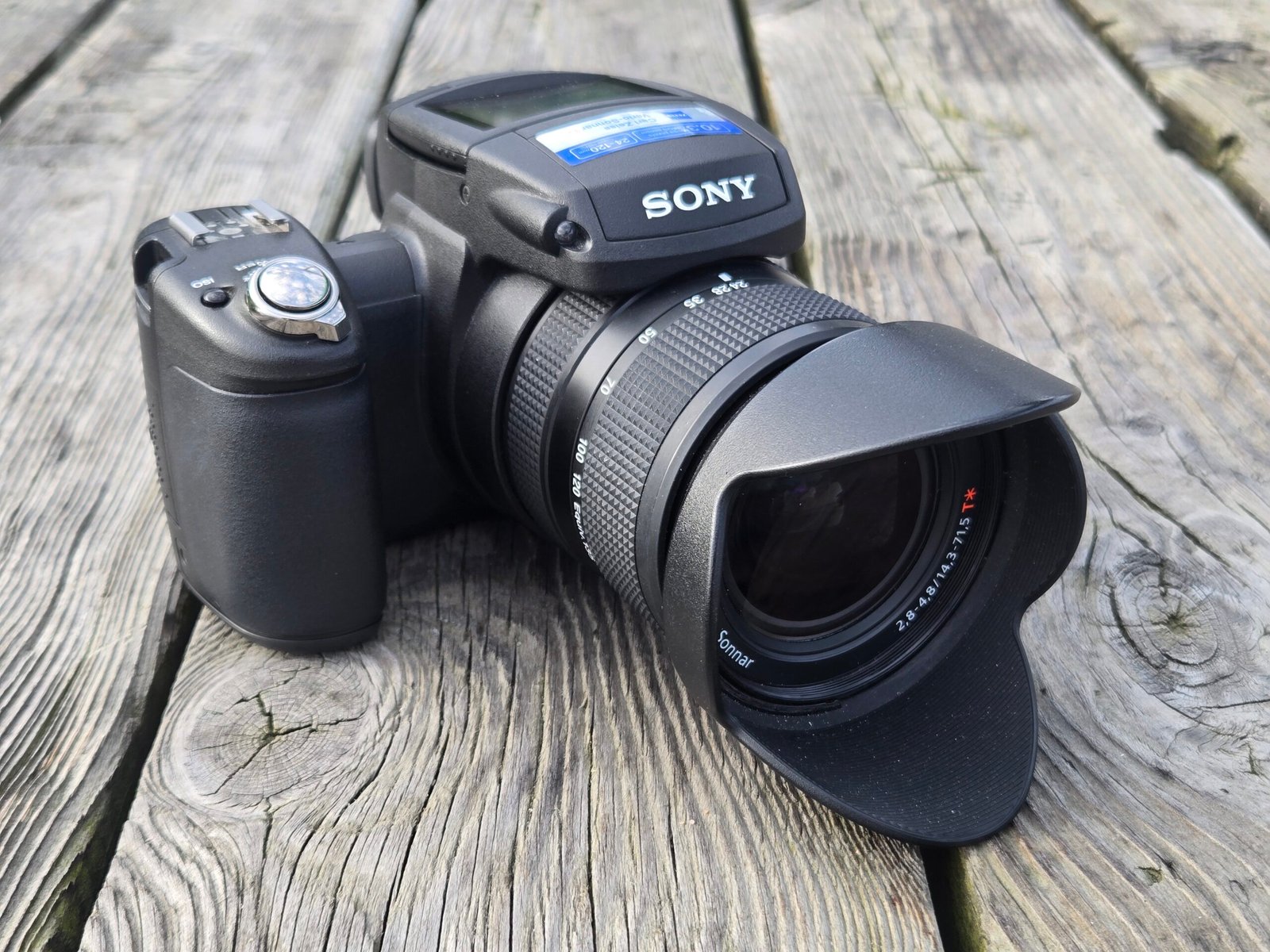
Sony DSC-R1
The Sony DSC-R1 followed a long line of similarly shaped bridge-style cameras, although this was the first to use an APS-C sized sensor. Combining it with a versatile 24-120mm Zeiss Sonnar lens, this was an interesting value proposition for those that didn’t want to get stuck into buying and changing lots of lenses. It wasn’t a small camera by any definition, but it wasn’t bad for what it was.
Key Specifications
Date:
$ (inflation):
Sensor:
Resolution:
Burst:
DR Stops:
Sync:
SS:
AF points:
Video:
Live-View:
ISO:
OVF:
LCD:
Memory:
Data Cable:
Weight:
Battery:
2005 (Dec)
$999 ($2,100)
APS-C (1.5x) CCD
10mp
3 fps / 3 RAW
7.7 (12bit)
1/2000th
30s – 1/4,000th
5 (5%)
No
Yes
160 – 400
0.44” / 235k
2.0” / 134k
Mem Stick / CF
USB 2.0
995g
NP-FM50
Market
Being the first camera of it’s type to use such a large sensor, there wasn’t anything that it was directly competing with at the time. If you look back at the DP Review article that talks about this model, it compares it to DSLRs with moderate zoom ranges. However, even there, anything that came close to competing with this on quality was bigger and more expensive. Anything that matched it on size and price, lagged far behind on image quality. The main down side of the Sony was the image quality of it’s viewfinder, but there were also advantages to the live-view, so it very much depended where you wanted to compromise.

Ergonomics & Build
The DSC-R1 is a bit of an odd shaped camera. It was DSLR inspired as far as the grip, viewfinder and lens are concerned, but the location of the LCD is very different. Articulating rear screens were rare back in 2005 and sitting on the top of the viewfinder was and is a strange place to put them. I find this rather interesting today, as you can have it pointing up when tucked away, which means it can be automatically in the right position when you switch from doing eye-level EVF, to low level shooting.
The button arrangement here is very different. The main dial being on the back of the camera, underneath the viewfinder, is odd. I’m trying to understand what they were thinking here, but I just can’t come up with a good reason. Considering the interesting rear screen here, there being a physical switch to change between the views makes sense, but I would rather it was on the side of the EVF. There is a physical ISO button, that’s the only one you get near the shutter button.

Image Quality
There is a lot to be impressed by here. The R1 gets you comparable quality images to a DSLR with a good zoom lens.
Fujifilm DSLRs originally interpolated the resolution up to double the native pixels, but if you bring them into modern software it doesn’t do that any more. The S3 Pro used two six megapixel sensors combined, one for the normal lighting and another for the highlights. This means it technically was twelve megapixels, but it’s only used to increase the dynamic range of the image, rather than resolution.
The colours are nice and vibrant here, as everything was from this time period. I used to think that was related to the CCD sensors, but you will find it on CMOS ones up to around 2011 too. It’s something that I am still trying to replicated with custom colour profiles on modern cameras, but here you will get it by default. For people not comfortable with tinkering, these old cameras represent the easiest way to get these really fun colours.

Battery
The Fujifilm S1 u0026amp; S2 Pro used four AA batteries for the digital components and two CR123a batteries for the film section (same as the Nikon F80). Fortunately many complaints from users caused them to reduce this complexity down to just the four AA batteries. This was much better, but it was still expensive compared to the rechargeable Lithium Ion batteries that everyone else used. The only benefit here is that you could pop into pretty much any corner store and buy replacements. Fortunately that is still true today because I actually needed to do that to capture the above and below images. What I am not so impressed with is the fact that you can burn through these batteries in just over 100 shots! That is absolutely mental!
Speed
When shooting RAW, the burst speed of the S3 Pro is only 1.4 frames per second (fps) and only for four frames (if you’re using compact flash cards). This was terrible performance, even back in 2005. It was worse than that of the S2 Pro, three years earlier and that was already bad because of the resolution doubling. The dual sensitivity sensors was actually pretty clever, but when you’re paying four times the memory and speed cost for something that didn’t always show up in your photos, it can be a really tough sell. A few months later, the Nikon D200 was able to capture nearly double the resolution at 5 frames per second and for 21 frames! Considering the Nikon was a dedicated DSLR design with a full magnesium professional body you might expect that to cost three times as much, but it actually cost over 30% less!
Shutter
The flash sync speed of the Fujifilm S3 Pro has been bumped up to 1/180th. This is a welcome boost from the 1/125th of the S2 Pro and F80film camera that it was based on, but it still feels rather lacklustre. It now matches the Nikon D100 spec, which was fine for a few months, but again, when Nikon brought the D200 out later in the year it would raise the bar massively in that area too. The D200 used a professional grade 1/1250th shutter, making the S3 Pro feel like a cheap toy.
Lens
The R1’s lens has good sharpness across the frame with no crazy vignetting or chromatic aberration. The zoom range makes for a great walkaround lens. It’s more versatile than most DSLR options from the time and the combo was not too heavy for what it was either, although it’s not overly fast.
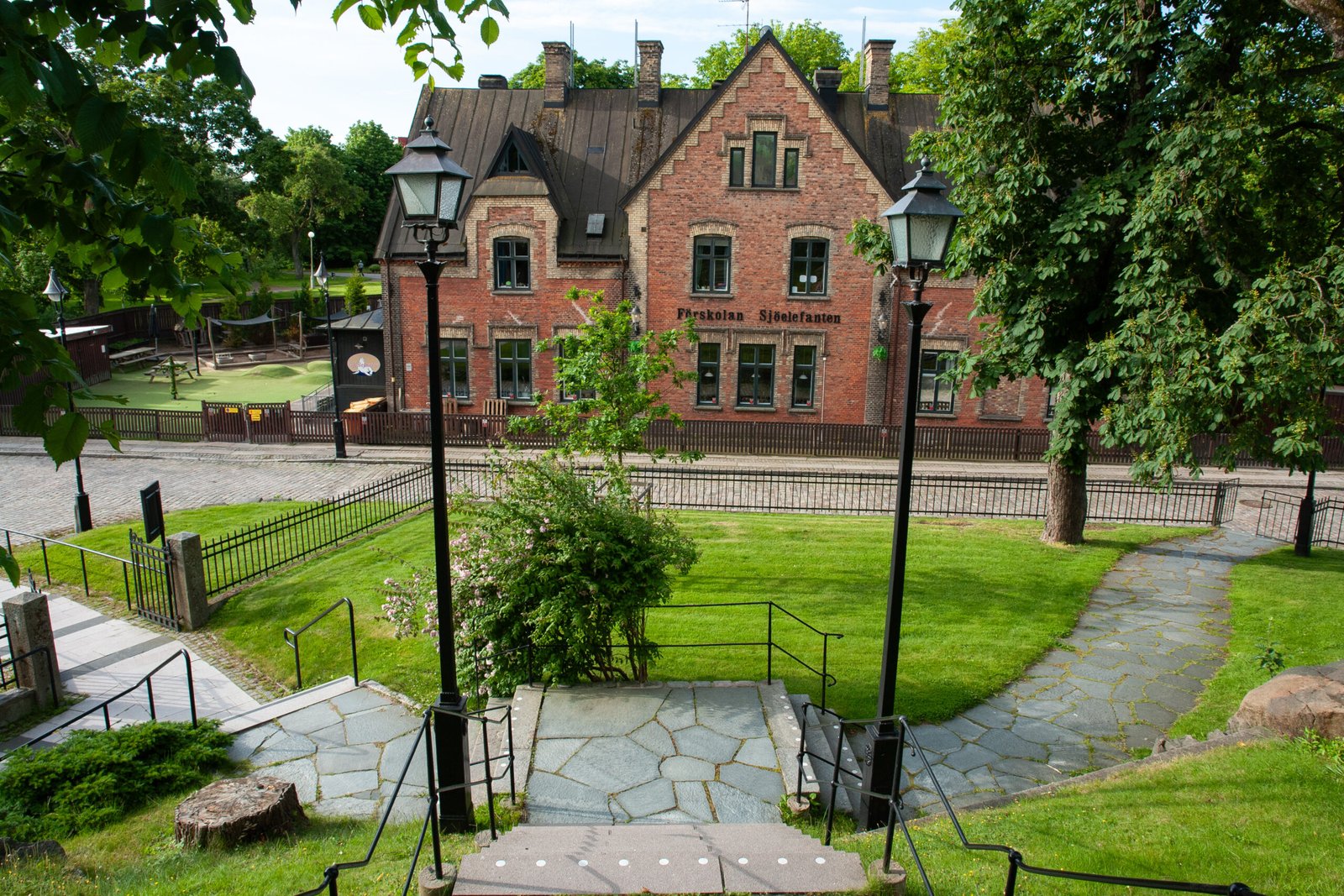
Despite the large sensor (for a bridge camera of the time) and the high quality lens, you won’t be able to create much shallow depth of field here. It’s actually easier to get bokeh on the wide end of the zoom. Given the crop factor the long end of the zoom range is equivalent to a 120mm f/8.1 on a full frame camera. That’s pretty atrocious and not just compared to what I am used to. Apart from making it difficult to get any kind of bokeh, the bokeh shapes are not smooth at all. The image below was only possible because the subject was bombarded with direct sunlight and luckily it wasn’t moving too fast. Trying to capture them in the shadows (even on a sunny day) was absolutely impossible.

Conclusion
I switched to Nikon after the Fujifilm S2 Pro, but part of my was very curious about the S3 Pro and using it now I think it could have been a very interesting camera to have had back in the day. This was about the most image quality you could squeeze out of a six megapixel sensor. I look at it now and am really impressed. Most of the issues I see are lens or autofocus related. When you do get a clean shot from it, the images can really shine!
Coming out the same year as the Nikon D200 did not help the S3 Pro, as it needed to be less than half the price to realistically compete. The D200’s resolution was better, even if the dynamic range wasn’t quite as good, but it’s the speed and file size that put it lightyears ahead of the Fuji at the time. Going back to use these cameras today, this is not so much of an issues as you’re not going to be choosing whichever has the ultimate quality. The D200 is a very nice camera, but the S3 Pro is a little more interesting due to its dual sensitivity sensor.
Despite not having the same chassis quality as the D200, the S3 Pro does still feel very well put together and considering that it weighs about the same while having a very nice integrated vertical grip, it’s a very interesting camera.