Squirrel Photography
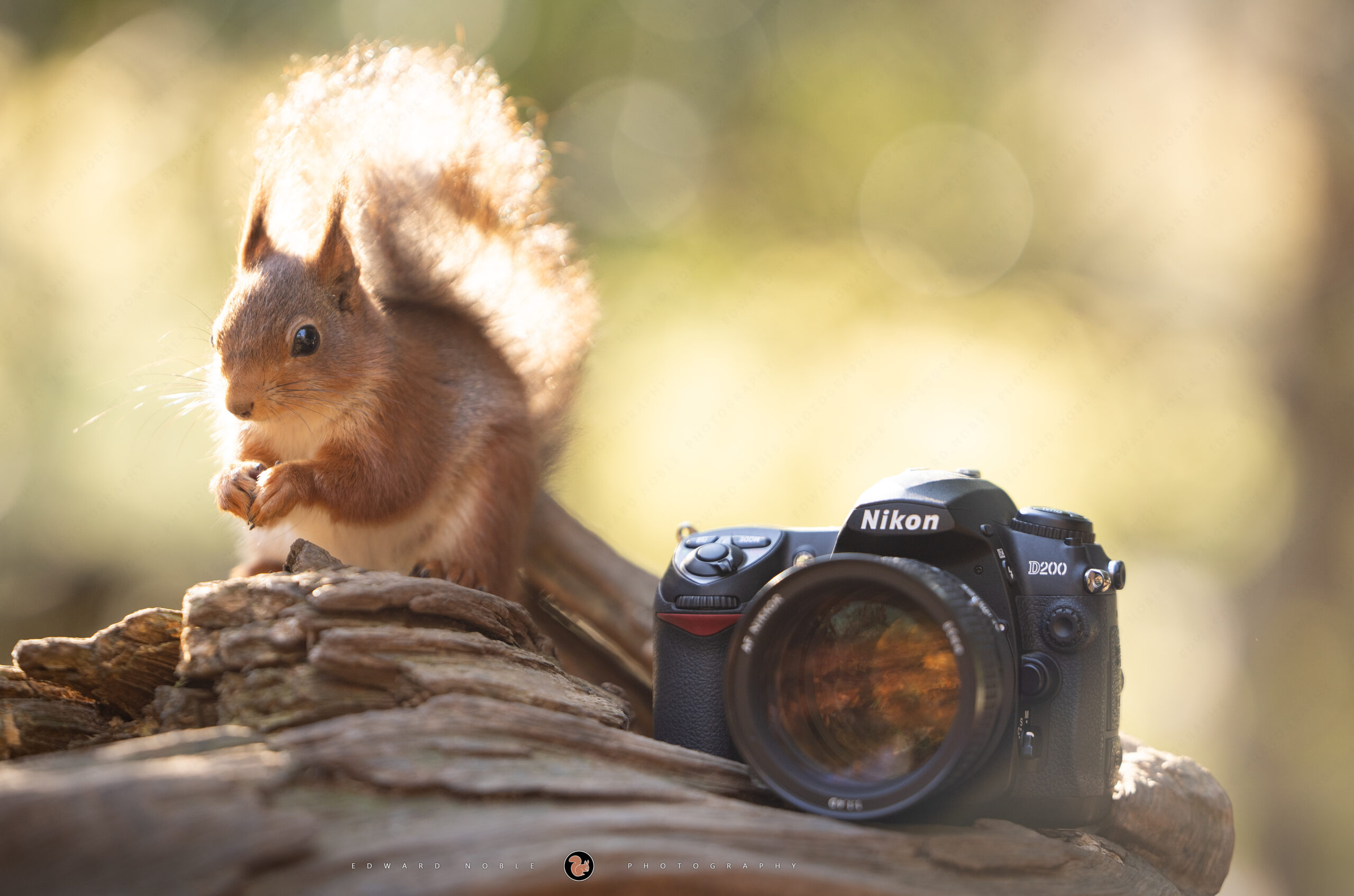
Squirrel Photography has been my main hobby since the pandemic. These are some of my favourite photos with explanations for what I feel made them work. Discussing; techniques, processing, settings, equipment and budgets. This image also demonstrates my collection of retro digital cameras, which you’ll find more of in the review section.
Squirrology: For any fluffy-tailed forest spirit fans – under each photo I will share information I’ve learned about squirrels along the way. Everything relates to Eurasian Red squirrels. All photos were taken within a 2km radius, in city parks (W. Sweden).
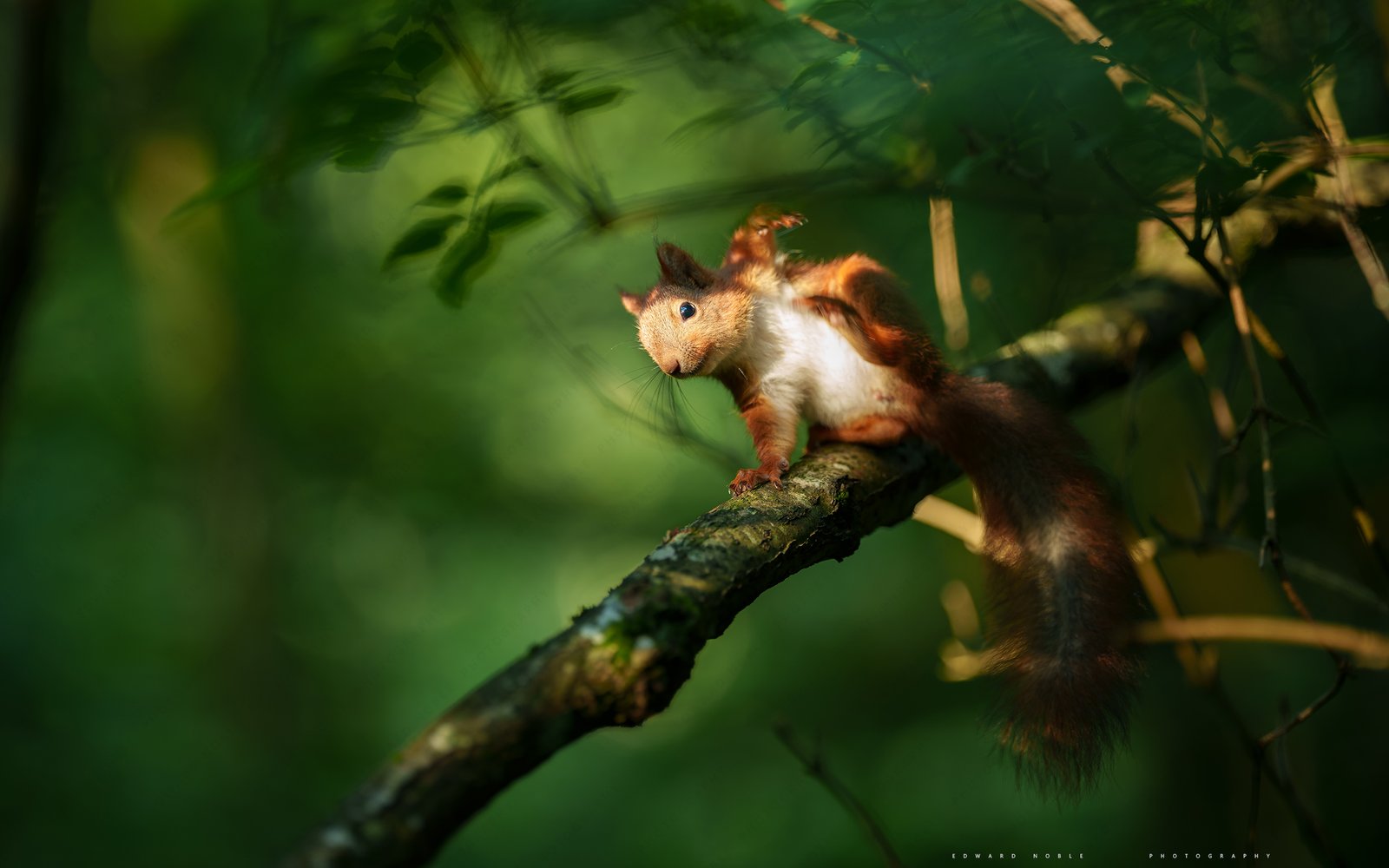
Summer: With the blurred foliage, splash of light and complimentary colours – this photo feels almost like a painting. Look for your subject in or near the dappled light, but be ready with underexposure (1-2 stops) if the direct light hits that impossibly bright tummy fur.
Location: Where I grew up (S.W. UK), I should have been surrounded by red squirrels (Sciurus Vulgaris Leucourus). The invasive Eastern Grey squirrel (1876) gets most of the blame for this, but that ignores several important historical events. Firstly; 99% of the UKs natural woodland was destroyed by humans hundreds of years ago and the red squirrel is extremely sensitive to its habitat. Secondly; they were hunted, nearly to extinction, by land owners up until very recently (using one of the same excuses they continue to use when slaughtering the grey squirrel today).
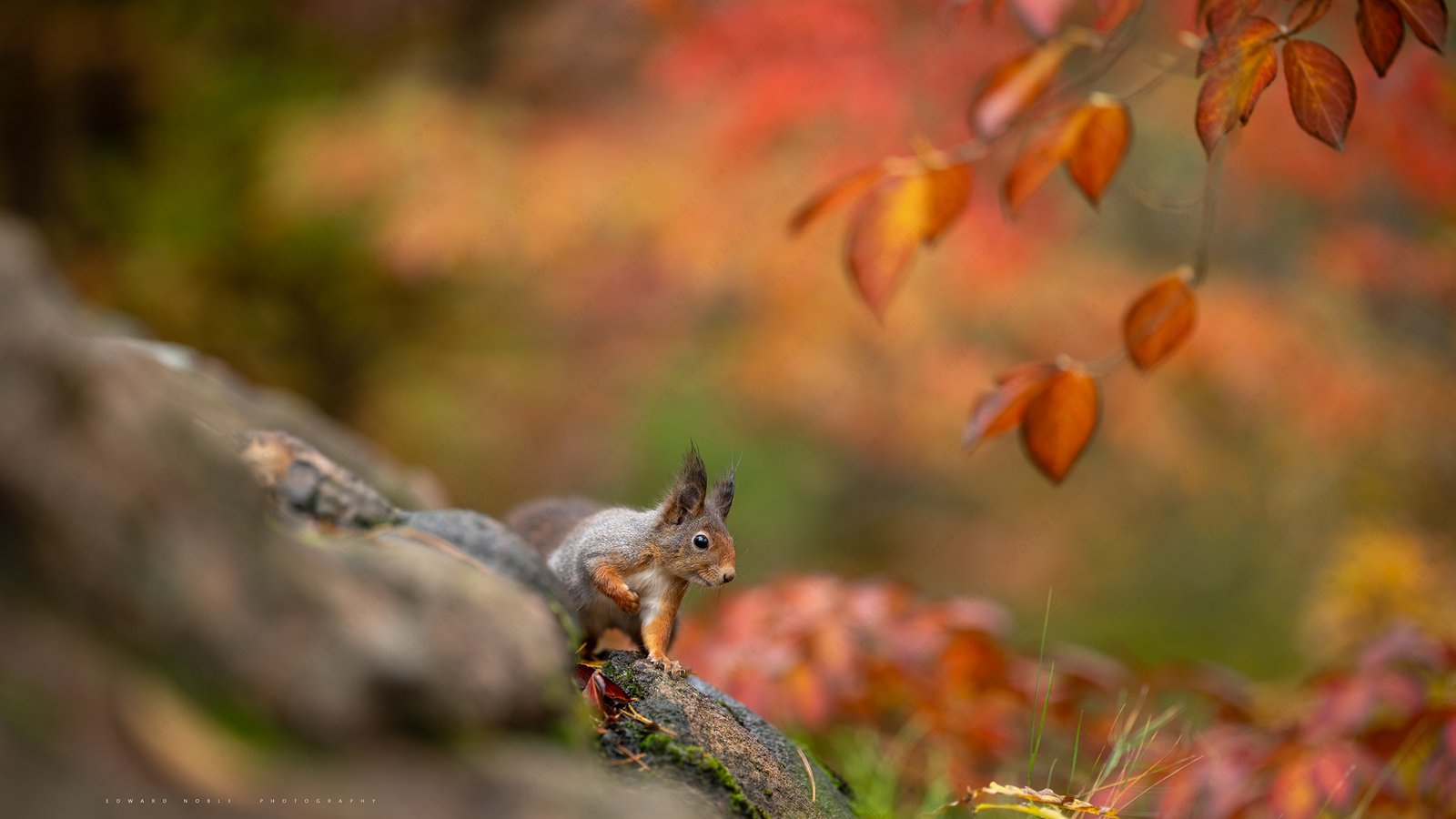
Autumn: The magical colours don’t last long here in the north, but they can be so pretty. It’s worth spending extra time outside trying to capture your subjects in these conditions. Also, the squirrel’s winter coat will be starting to grow back around this time, helping to make an even better photo.
Species: Other than a few small, endangered populations of ground and flying squirrels, Europe only has the Eurasian Red. This species ranges over 9,000km from County Cork to Hokkaido. Now that I have moved to Sweden they are relatively abundant, but deforestation has also been ramping up here for a while and animal habitats are not one of their considerations.
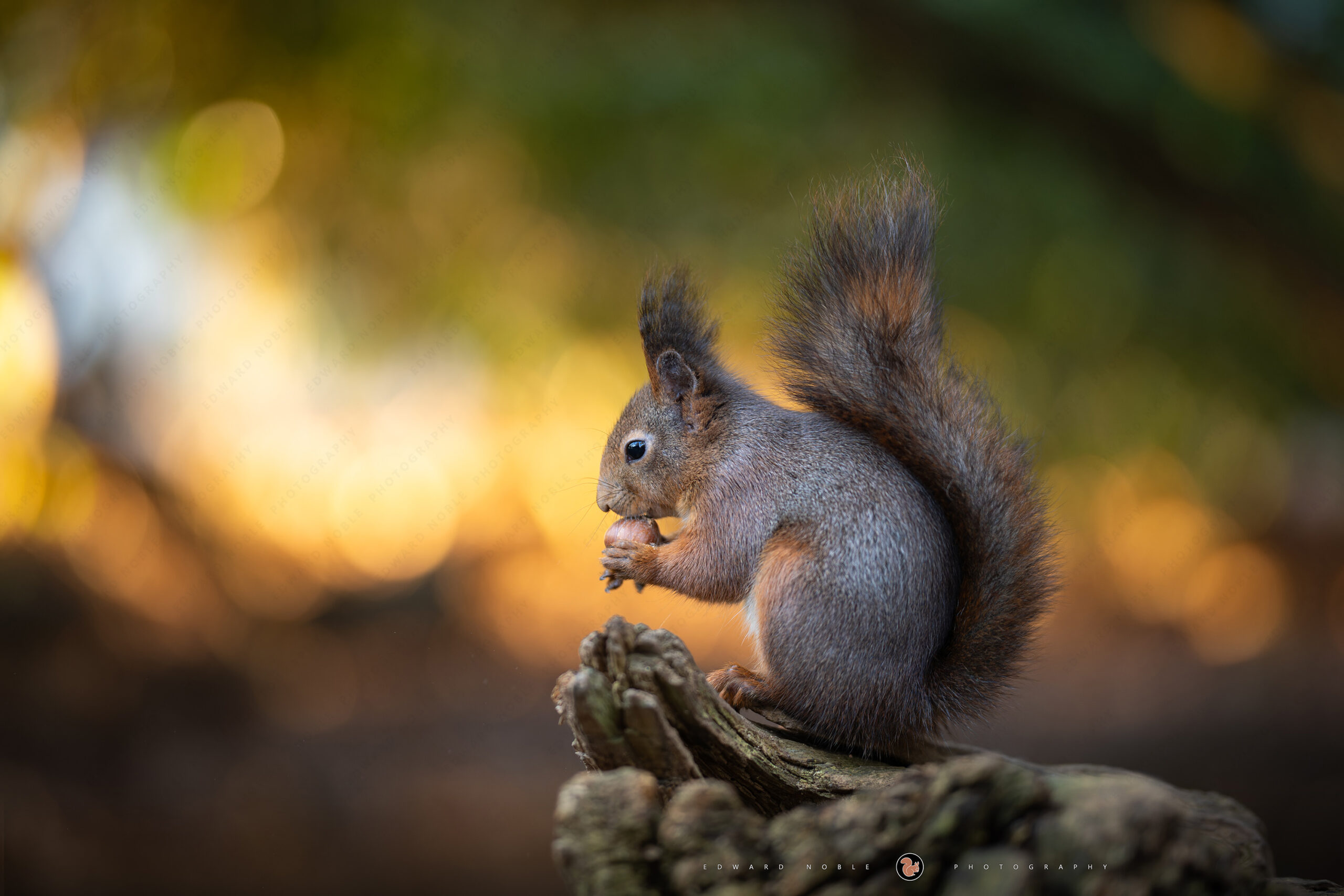
Value: For great subject isolation, clean images, a small lightweight package (800g) and a reasonable budget (€800) – The Sony ZV-E10 and Sirui 75mm f/1.2 combo is almost too good to be true. Although you don’t get IBIS or an EVF, you do get decent animal eye-Auto Focus (and for video), good speed, silent shooting and great image quality.
Sub-Species: Fortunately red squirrels are no longer categorised by colour, which can vary a lot in each location. Unfortunately, the Latin name for the Scandinavian squirrel is ‘Sciurus Vulgaris Vulgaris’, meaning; “Shadow-Tail Common Common”. Since the Swedish Botanist, Carl Linnaeus (1761) was too lazy to name them properly.
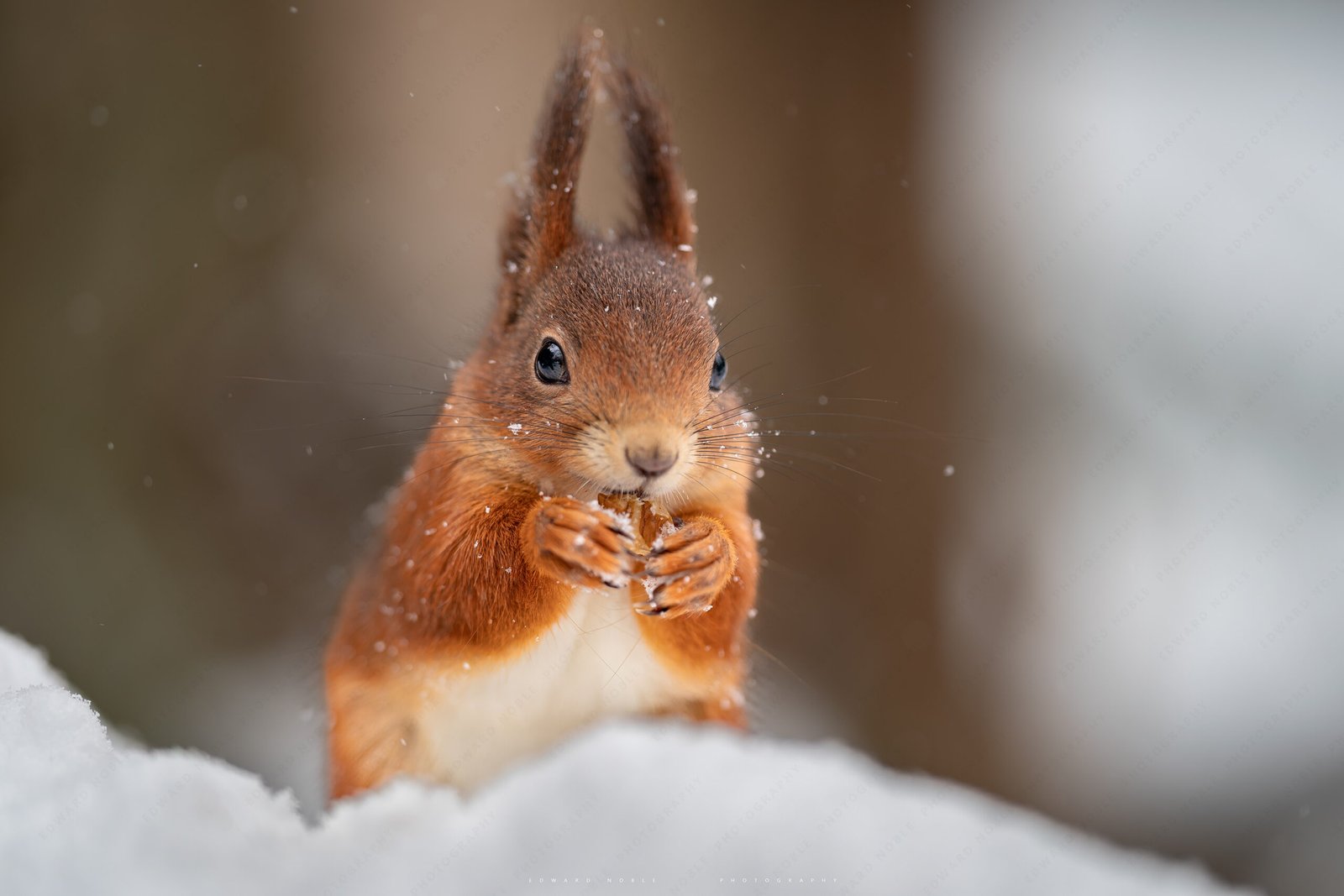
Snow can be tricky to expose for, since your camera’s metering wants to make every scene neutral grey. The more snow you have in frame, the more positive exposure compensation you will need to make your subject look correct.
Friendly: We are very lucky to have access to friendly squirrels in heavily forested city parks. They are attracted to bird feeders which attract photographers and so they are quite used to people. Getting this close to fully wild red squirrels is not easy, so don’t be surprised if they run away from you when exploring random forests.
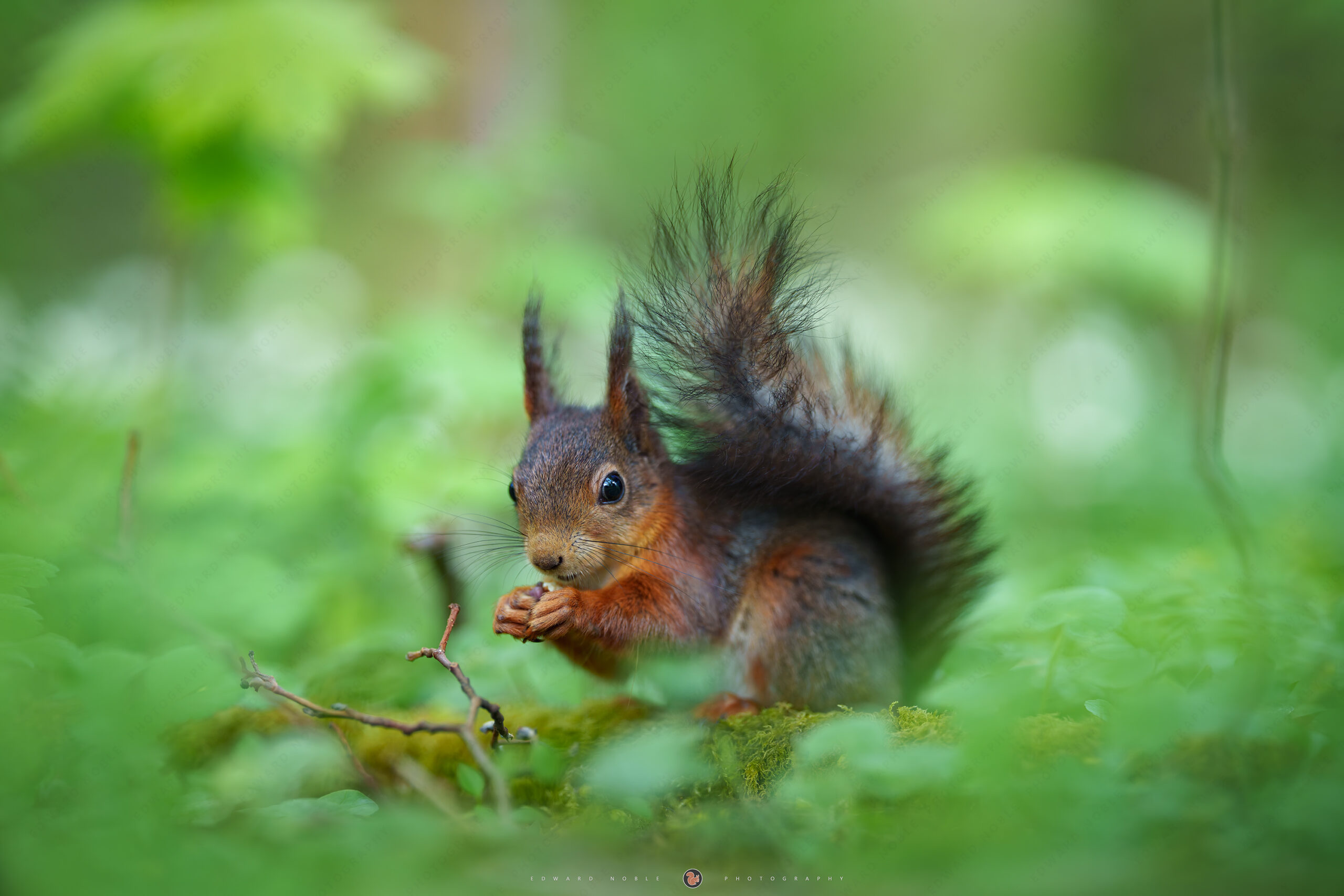
Fleeting: Some conditions are pretty rare. Snow and Autumn are obvious ones, but the more nature photography I do, the more of these fleeting moments I notice. Wood Anemones and fresh (low) spring foliage (above) are also pretty epic, but they only last a week or two, so when I see this I often take a day or two off work to capture squirrels here before they go.
Bite: Squirrel’s can easily break open a walnut or hazelnut shell, able to concentrate about 48 megapascals (7000 psi) of pressure on to their front teeth. That’s a harder bite pressure than any crocodile or shark. Their four front teeth, which never stop growing, are stained orange from an iron infusion. Gnawing on hard surfaces, like nut shells, keeps them in check.
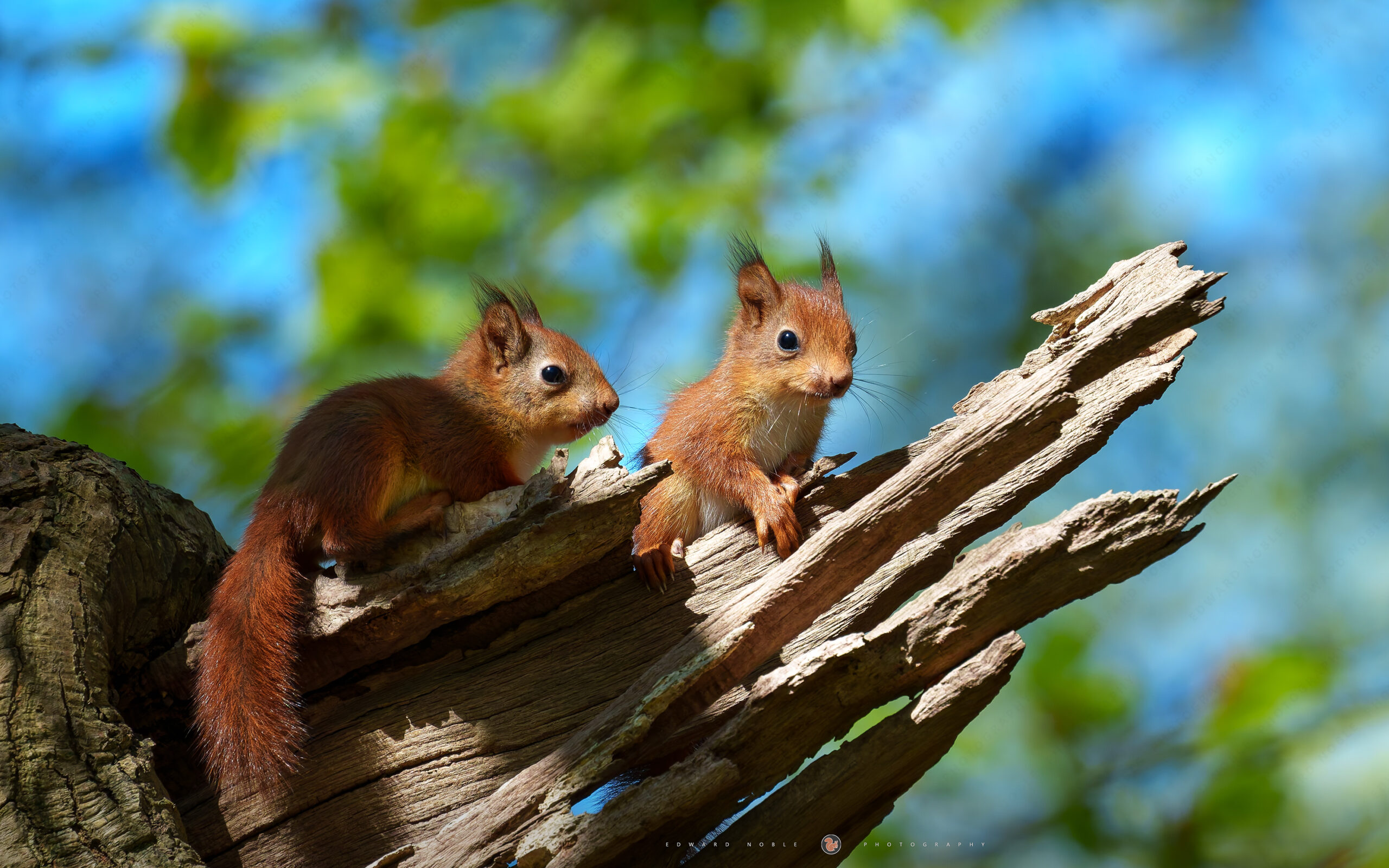
Telephoto: Dedicated full frame wildlife lenses are very big, heavy and expensive. If you are not committed to shooting only that kind of photography it can be difficult to spend that much on something that quickly becomes annoying to carry. Think very carefully before buying and if you’re hesitating consider smaller sensor cameras.
Juveniles: With an abundant food source, a female squirrel can have up to three litters of three to six young per time (although on average it’s much less). They can be independent by three months of age, but with a mortality rate of up to 85% for the first year and 50% for each subsequent year, they have a very tough life! Although they have been known to live up to nine years in captivity, in the wild it’s quite rare for them to make it to their third year.
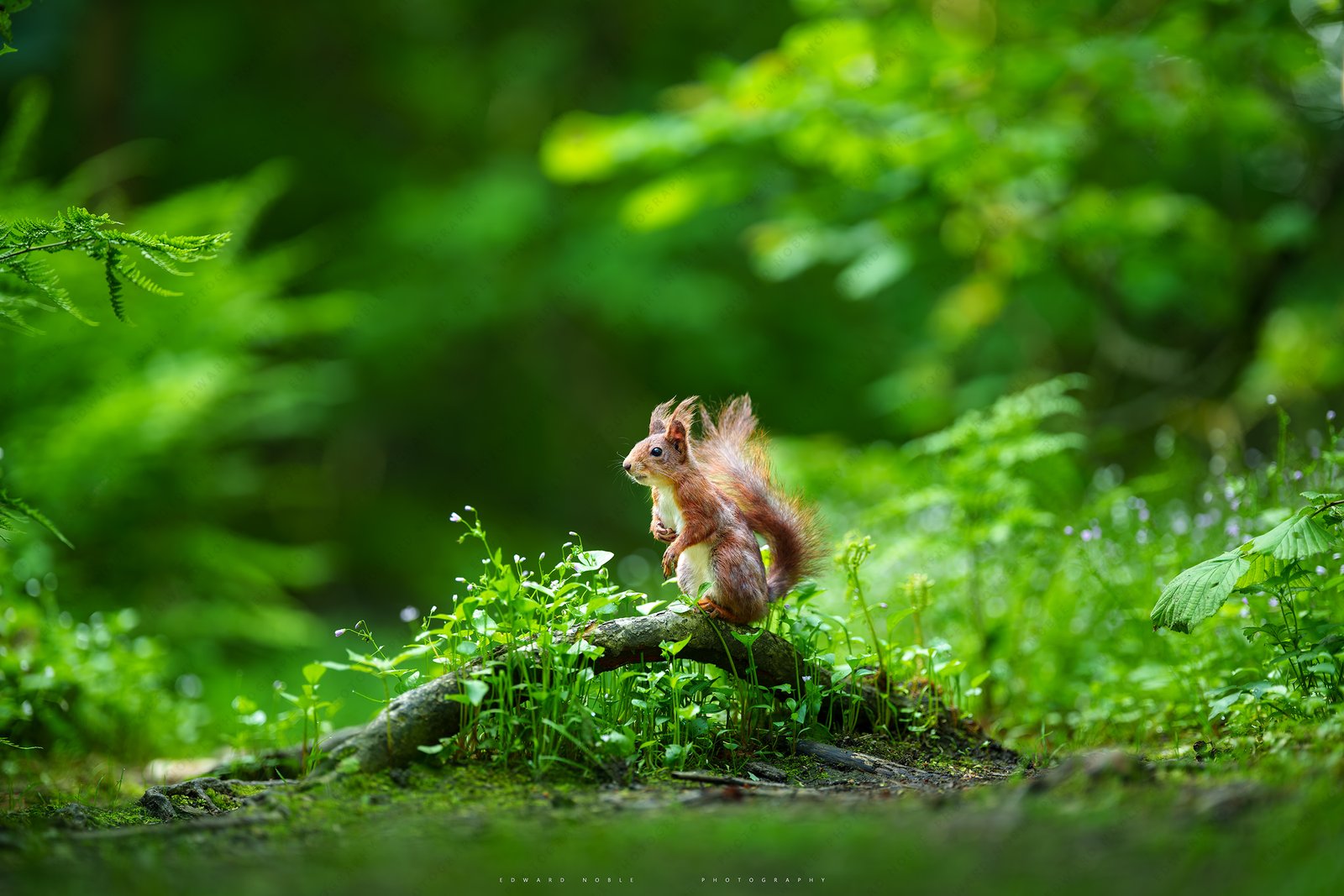
Posing: It’s worth noting that these squirrels are friendly. However, getting them to go where I want is like herding cats… surrounded by dogs… in a thunderstorm. I encourage them to specific places with food (medium sized pieces of loose nuts). If you are going to do this please check out my food guide below…
Good Food: Walnuts, Hazelnuts and pecans are their favourite treats, especially in the shell (although they usually bury those). Apple, grapes, carrots, spinach and acorns are very healthy, but will get ignored if they can smell something tastier. Dandelion stems, kale, cuttlefish, deer antlers or bones will be appreciated if they’re running low on calcium. Also consider bringing them water in the summer.
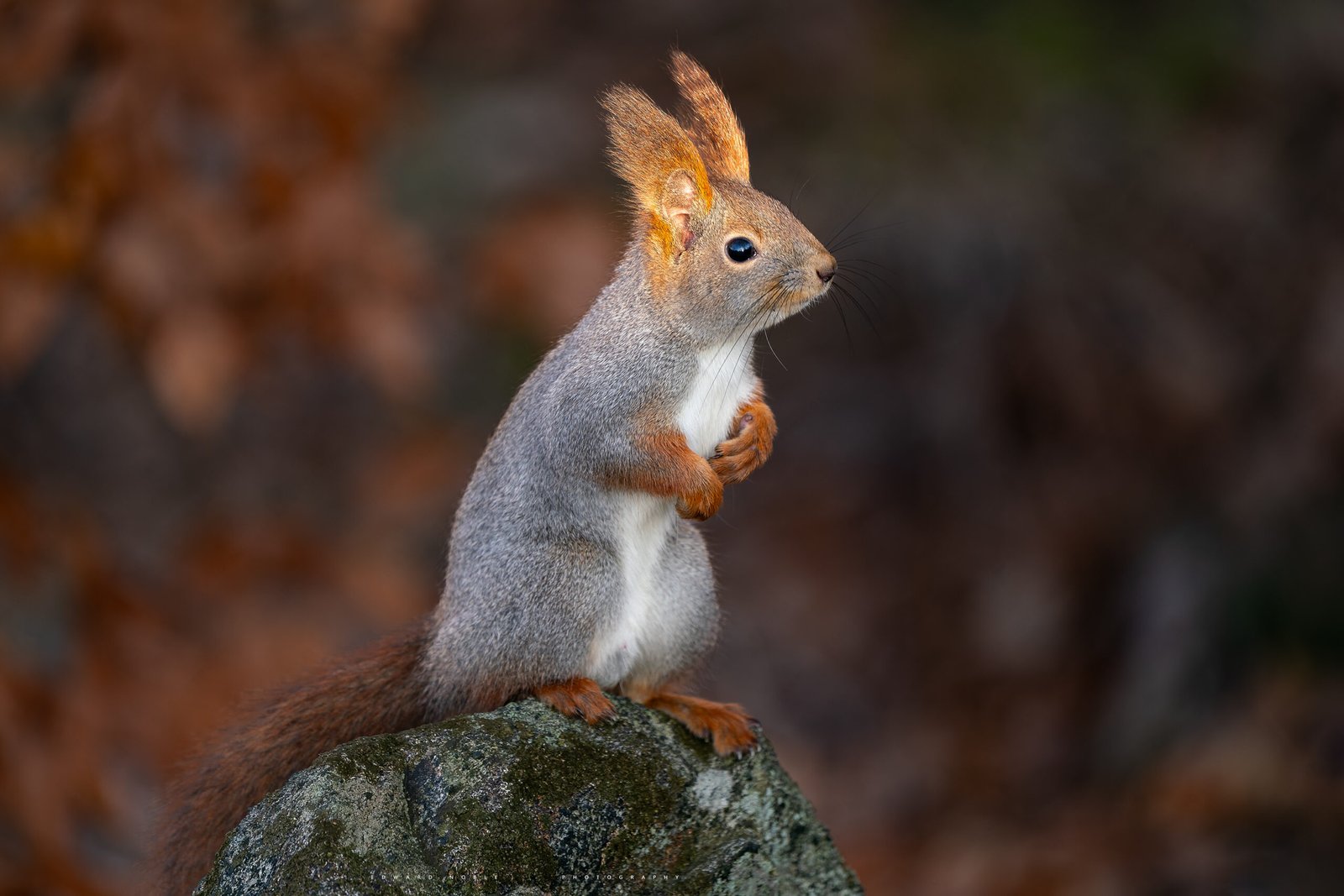
Backgrounds: Getting camouflaged subjects to stand out against their surroundings can be tricky. They are coloured similarly to the top of pine trees (where they like to nest), or autumn leaves (where they stash their food for winter). Try photographing them when they stand up on high vantage points.
Bad Food: Fried, processed, or salty foods are very bad for squirrels, but also… Dairy, almonds (cyanide), sunflower seeds (cadmium), Brazil nuts, pistachios, cashews, conkers, dried/citrus fruit and corn should all be avoided. Peanuts can contain a toxic fungus, but their high phosphorus and low nutrient levels will increases their chance of metabolic bone disease. This is true for ALL squirrels, not just Eurasian reds, so please just avoid them.
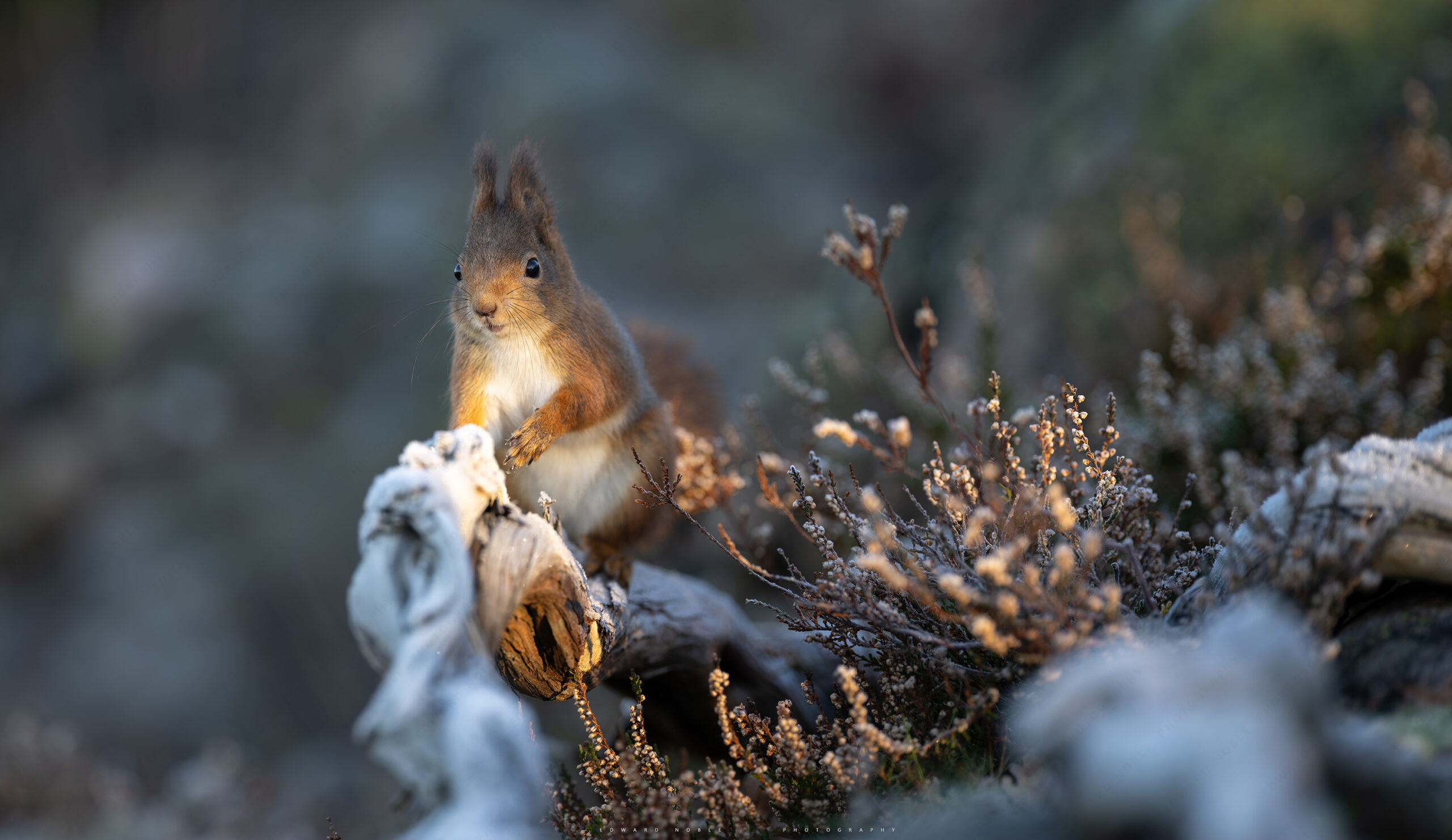
Icy conditions can be a more interesting and ethereal backdrop than pure snow, so look out for sub-zero mornings with high humidity.
Seasonal look; As with anything, the more time you spend with squirrels, the more you will be able to recognise individual characters. However, don’t get hung up on colours. Their fur colour changes throughout the seasons and each year as well.
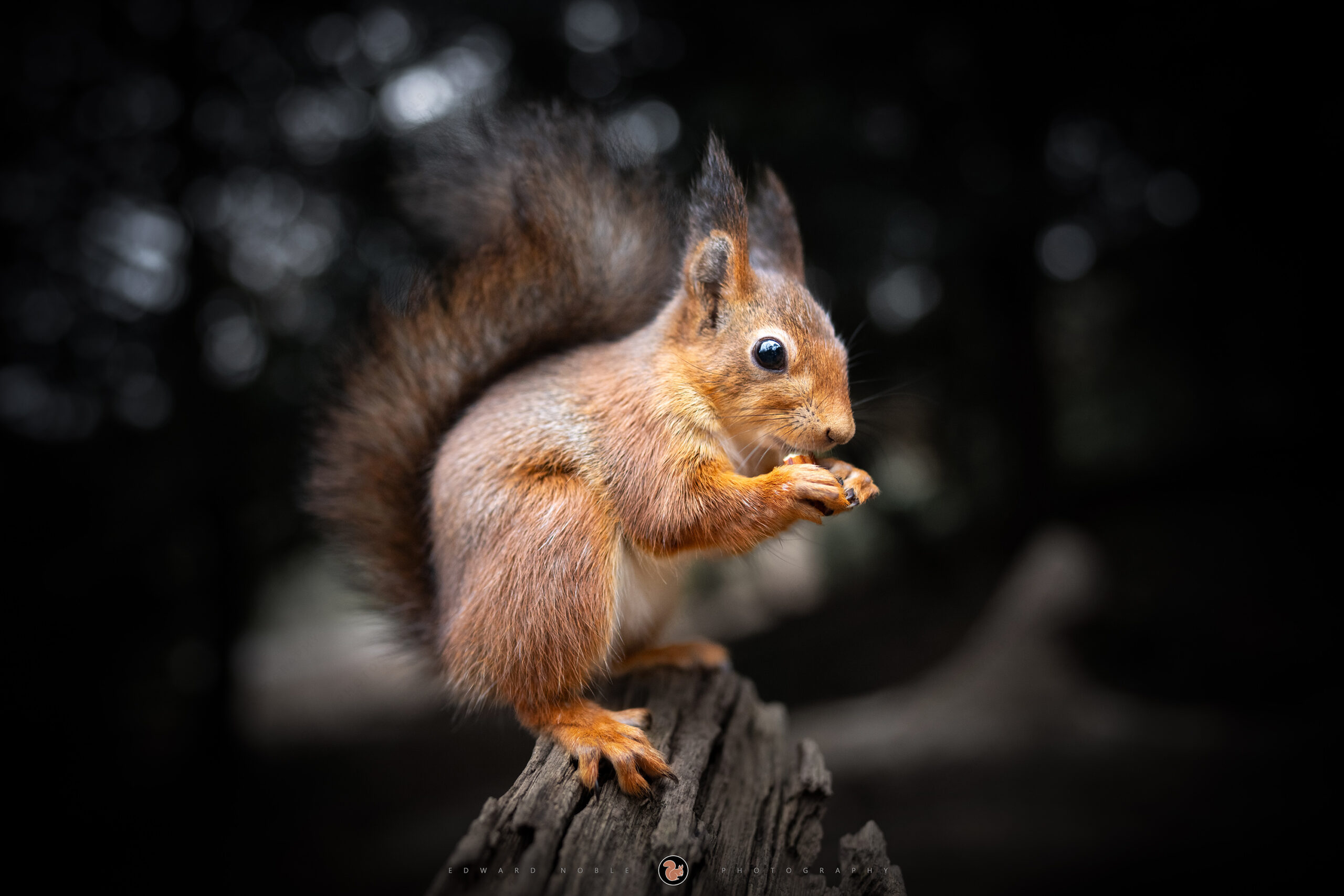
Backgrounds can often be dull and depressing in the winter without snow or ice, so I sometimes lower the saturation and brightness on an inverted selection of the subject to help make the images more striking.
Summer coat colours can range from a pale yellowy red to almost completely black. The darkest colours are found on the central European subspecies, usually found at higher altitudes. Red is by far the most common, but you can find a surprising variety in a single area, as demonstrated by this gallery, which are all taken within a 2km area.
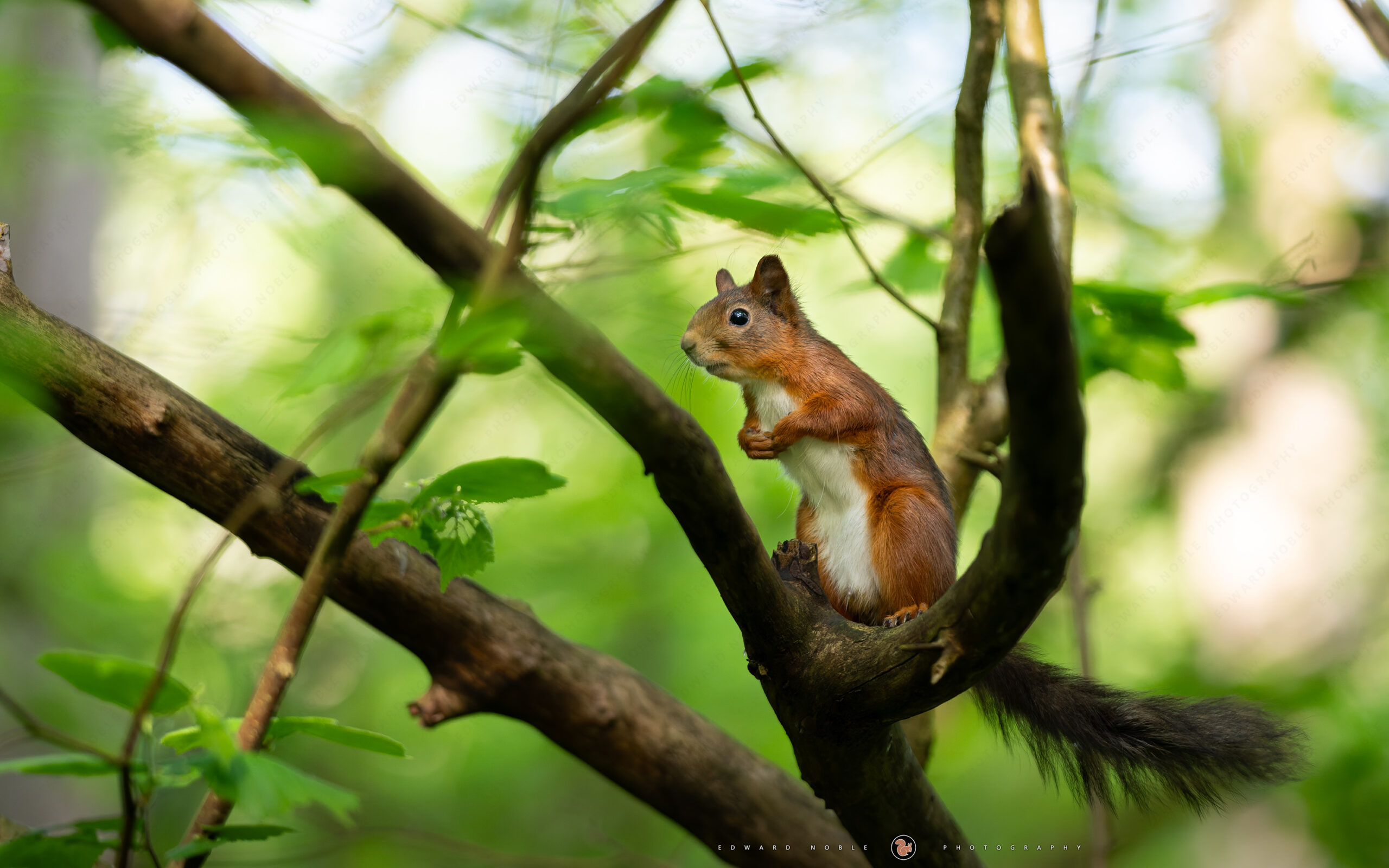
Composition is important, but it is not something you should try to nail in camera. Early on I got obsessed with detail so tried to fill the frame with my subject, but later on I realised that having more surroundings was often better for context, as well as more freeing to crop in post.
Thumbs: These tiny appendages, having no claw. Set far back on their hands, they’re kept clean when running around and thus more hygienic for grabbing food. When they finish eating you will often see them frantically cleaning their thumbs.
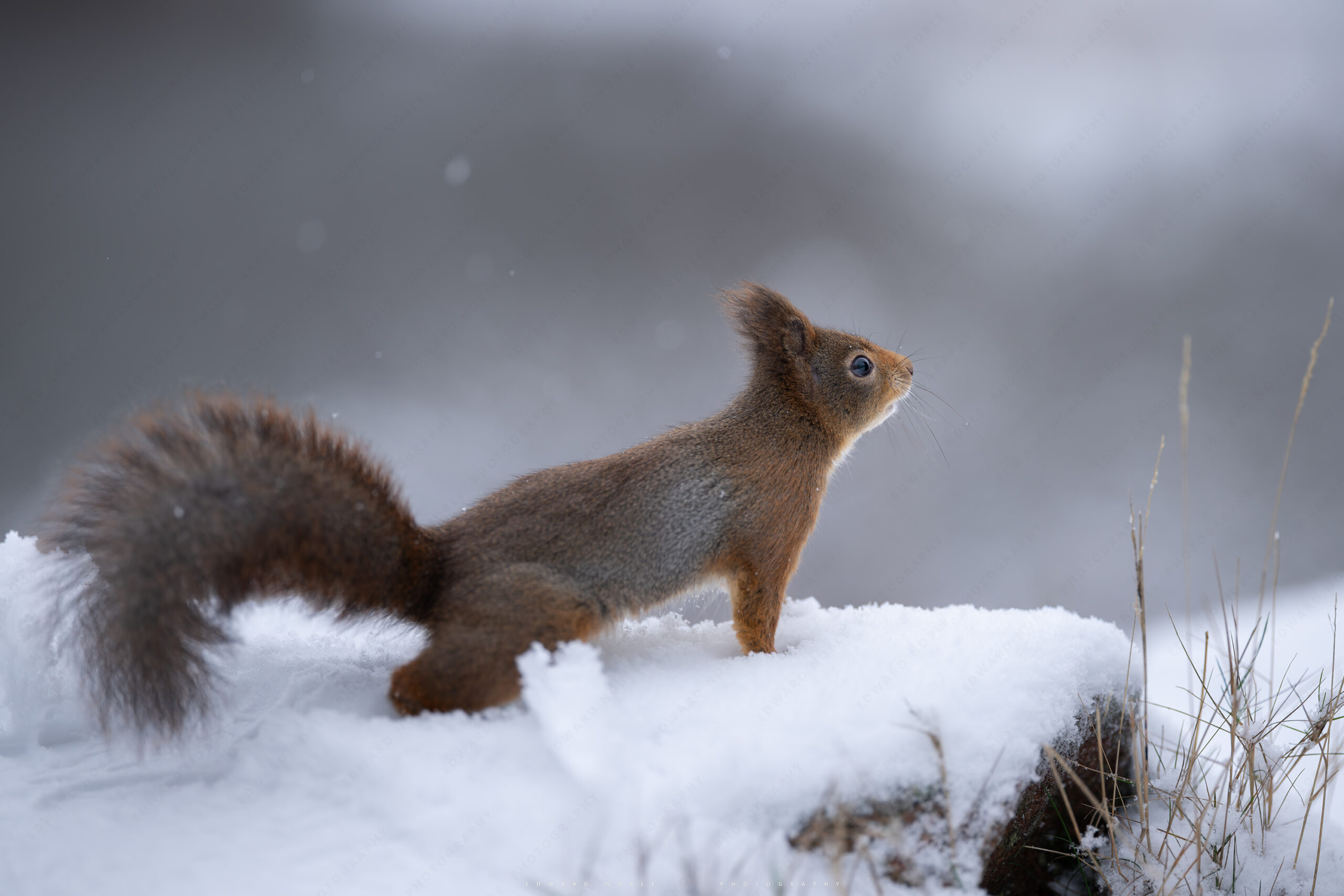
Snow is pretty, but it can be really difficult to make pretty snow photos look good. Since we only get a few days of snow per year in southern Sweden I usually run out to do some photography, but it can be stressful to capture something good before it goes. I recommend going out with a plan of what you want to achieve.
Body fat: Eurasian red squirrels cannot story body fat for winter, so they grow a thick winter coat to keep them warm. Burying food, to save for the winter, is also very important, so they will be desperate to find as much as possible during the Autumn months.
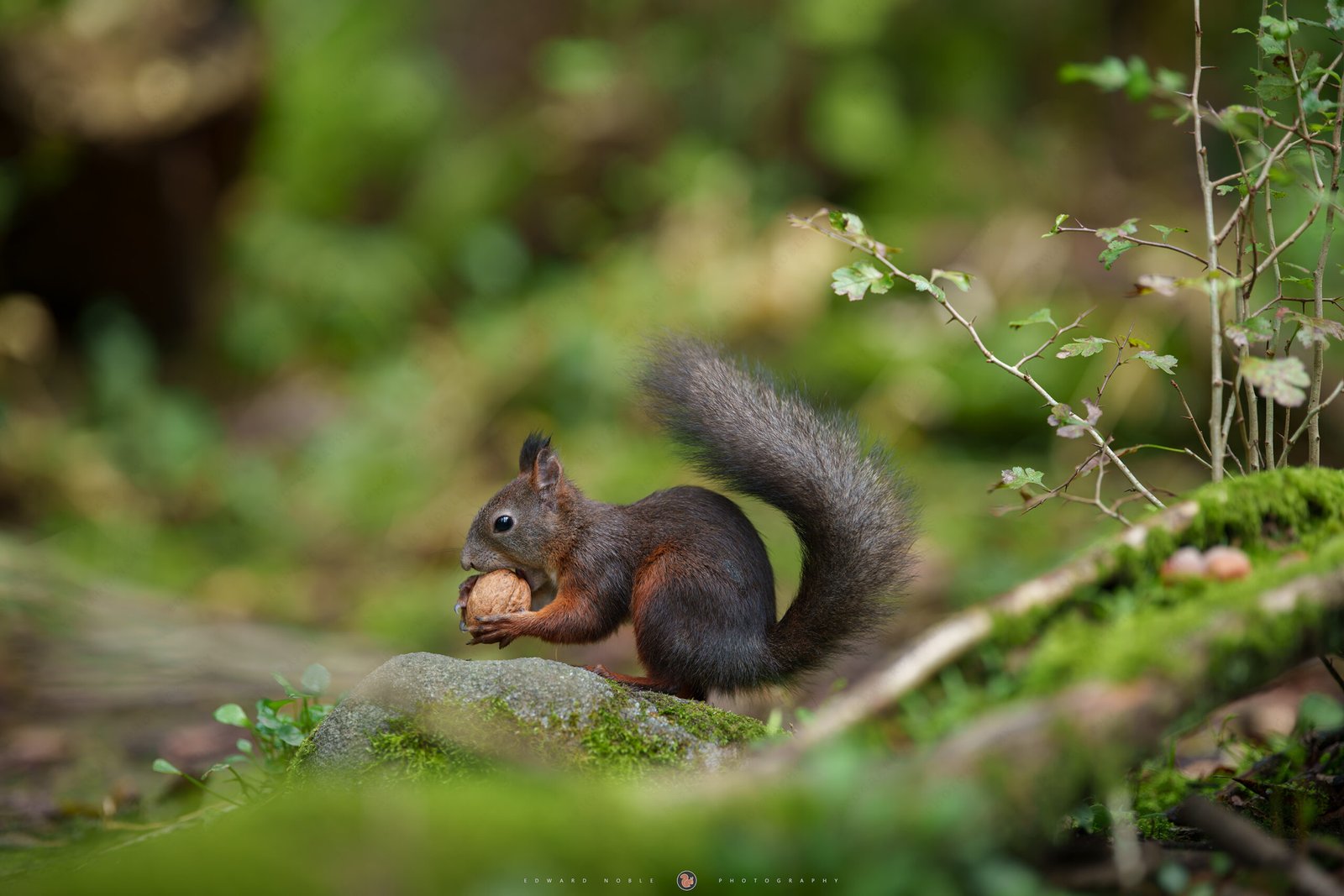
Natural poses: Although it is easier to photograph squirrels while they are eating, those photos will tend to look all the same and rather boring after a while. Although it works to feed them to keep them around, it’s much better to photograph them when they are doing something else.
Moss: Squirrel’s utilise moss whenever they can. Rubbing their faces on it to clean themselves after eating. They also use it to line their dreys (nests) for extra warmth and comfort. Added to their pine scene, it gives them a wonderfully natural forest smell, if you can get close enough to one.
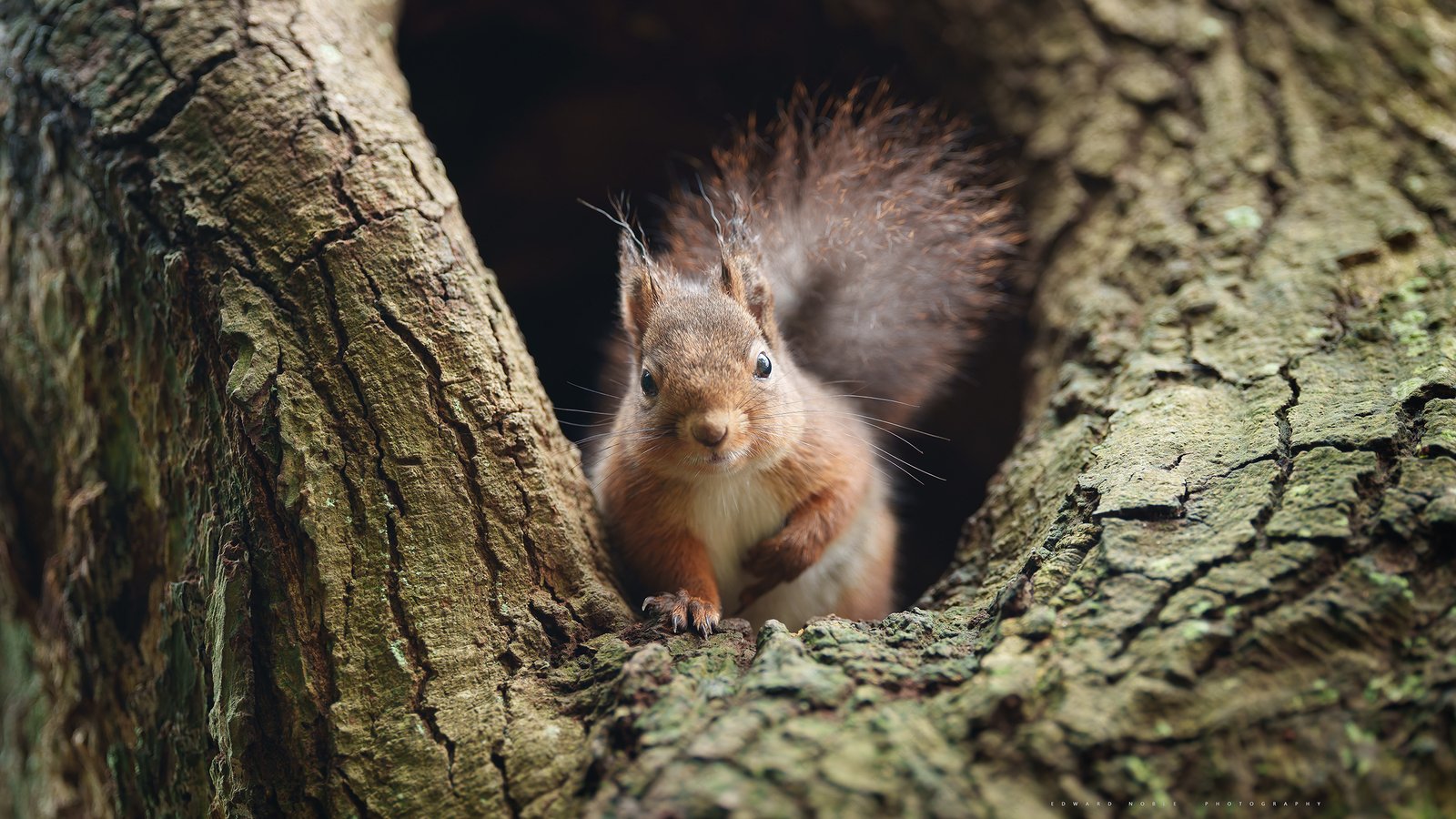
Cropping: Although you mostly don’t need a high megapixel camera and ridiculously sharp lens, there are times when it comes in handy. This image needed a 300mm lens, but since I only had a 135mm, I luckily had a good enough lens and high enough resolution to punch in, in post.
Ankles; Squirrel’s are one of a few animals that have double jointed back ankles. This allows their feet to rotate 180 degrees and thus enables them to run any direction around a tree, helping them to avoid predators and each other.
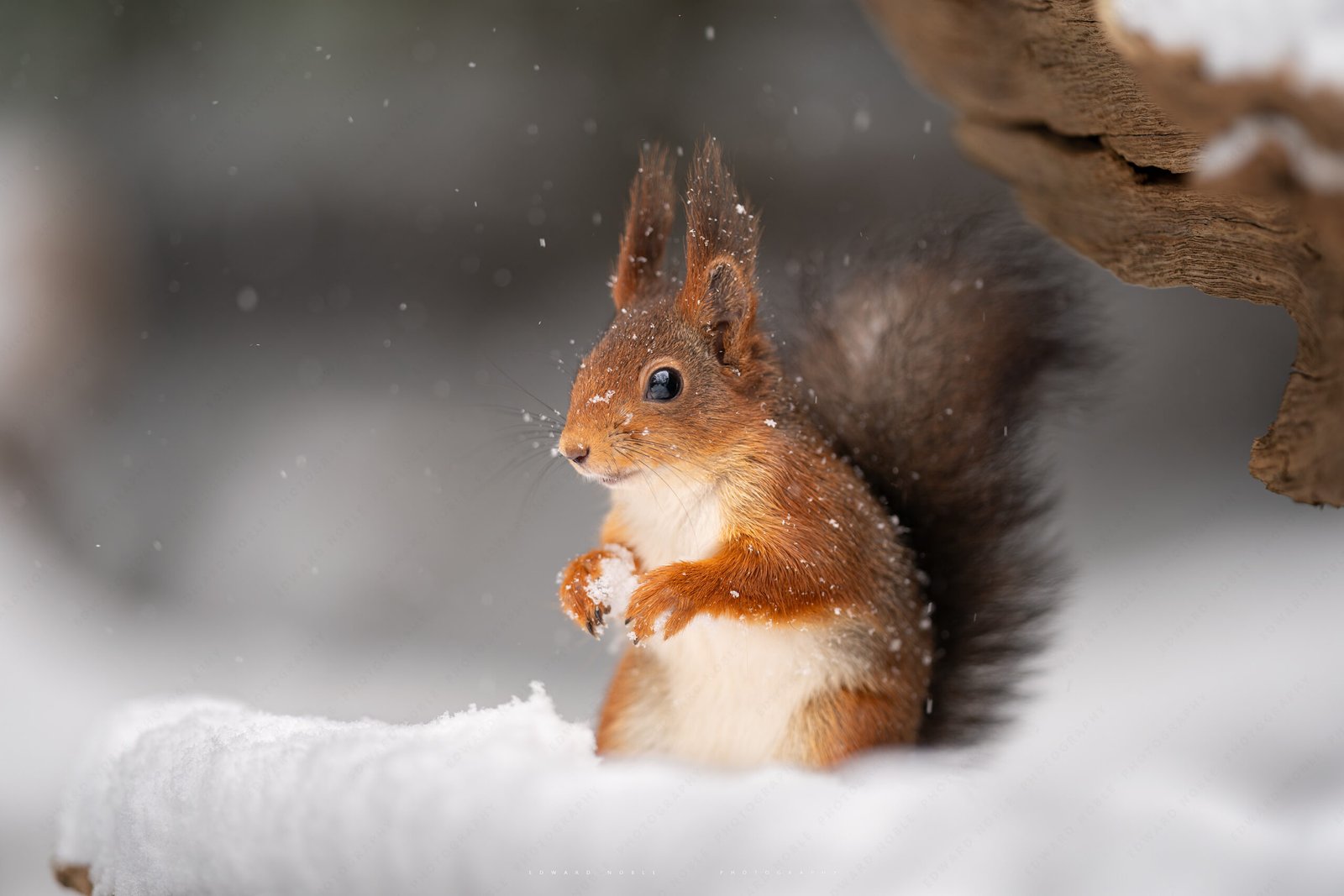
Falling snow: Although we only get a few days of snow per year, we might only get a few hours of snowfall. That can often happen at night. If you are lucky enough to find these conditions and squirrels risking the cold, I highly recommend choosing a lens with a long lens hood, to keep the snow off of the front element.
Winter coat colours can range from light to dark grey, although extremities (arms and ears) will retain their summer colour. Places with colder, harsher winters often have squirrels with lighter coloured winter coats, but this is not always the case.
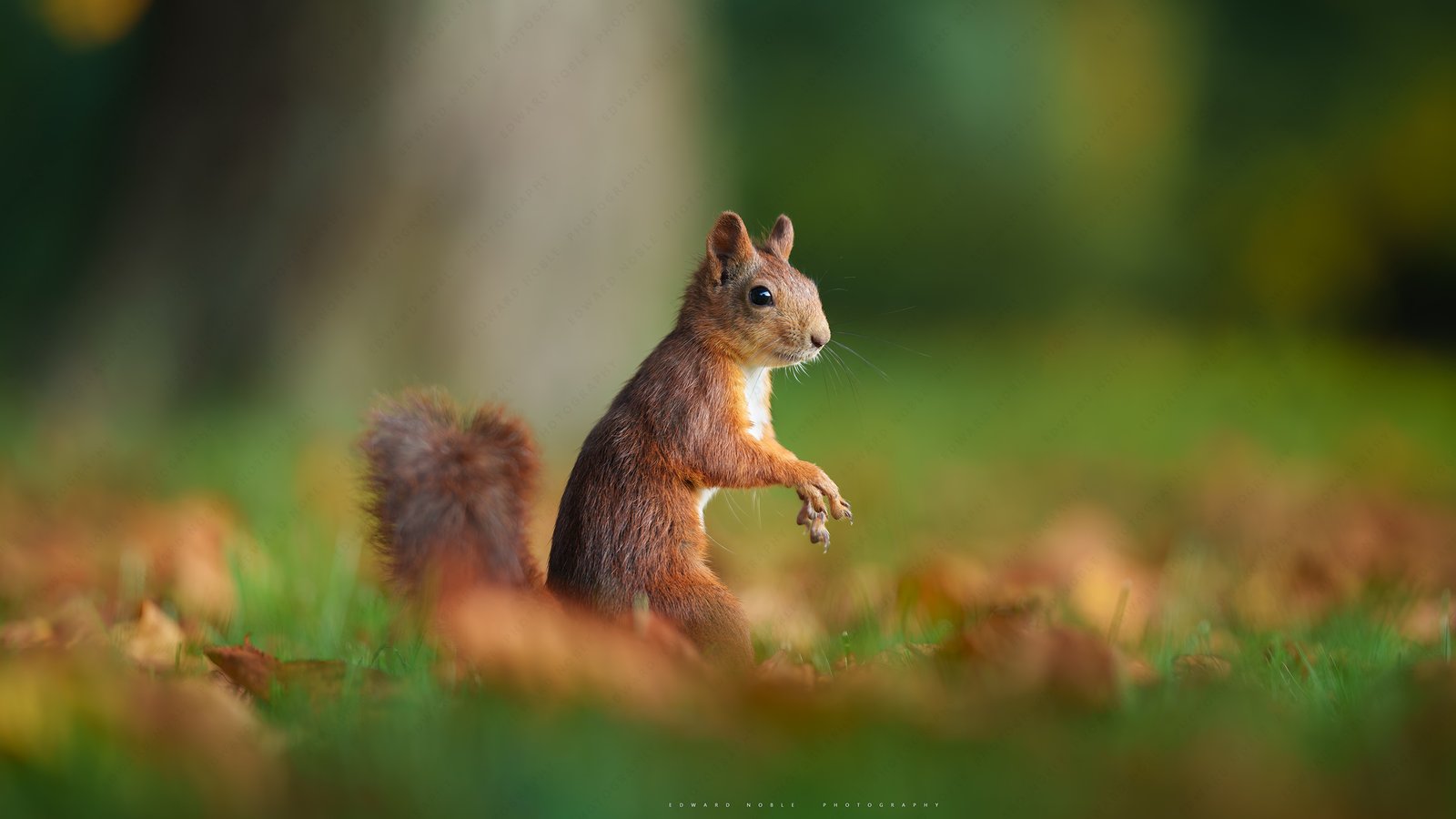
Light & Shadow: The broken light coming through leaves can make for some interesting patterns. Look for where these areas are and try to draw your squirrels there. This is not easy as squirrels rarely do things on command and by the time they do the light could have moved, but it is worth a try.
Dirty face: If your squirrels look like they have been sniffing glue in the late summer / early autumn, this is likely because they found some fresh pine cones. The sticky tree sap means that mud sticks to their fur when they are foraging / burying.
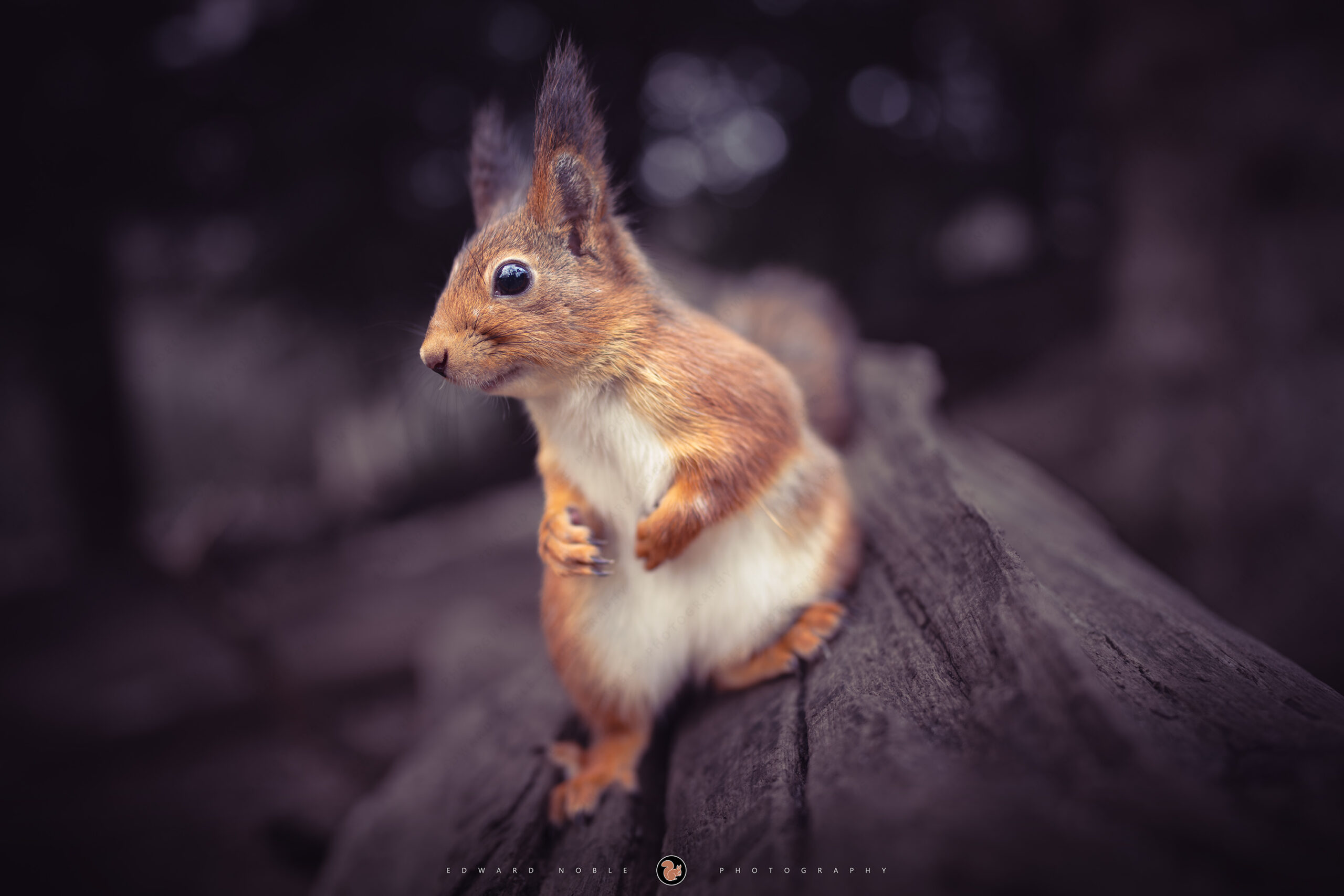
Split-Tone: Similar to the shot where I darkened and desaturated the background, this was taken a step further and a split-tone (or colour grade) was added, while reducing the contrast. Whether you like this style is up to you, but varying degrees can be fun to experiment with.
Jump: Squirrels can jump up to 4m (13ft) between trees, which is equivalent to an average height human jumping 48m (157ft)
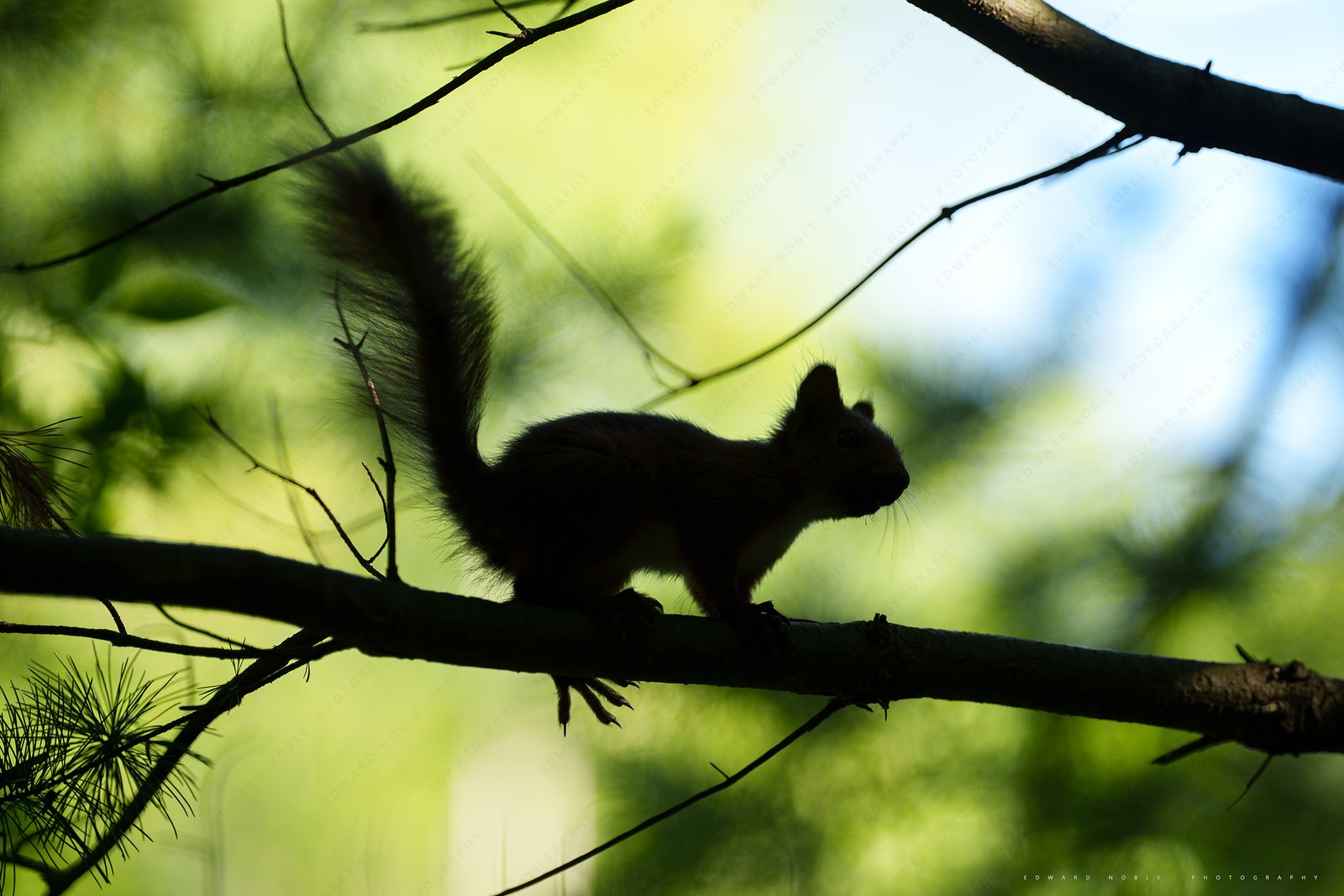
Silhouette: Pointing your camera up to photograph squirrels in their natural habitat will often result in a bright sky background and horrendous overexposure. It’s not generally desirable, but can provide some interesting results.
Claws: Squirrels running around trees all day keeps their claws about as razor sharp as they can be. Up to 7 weeks old they can run around on human skin directly without causing damage, but after that their higher weight and sharper claws will leave scars. If they reach for food they will easily cut your fingers, but they don’t mean to.
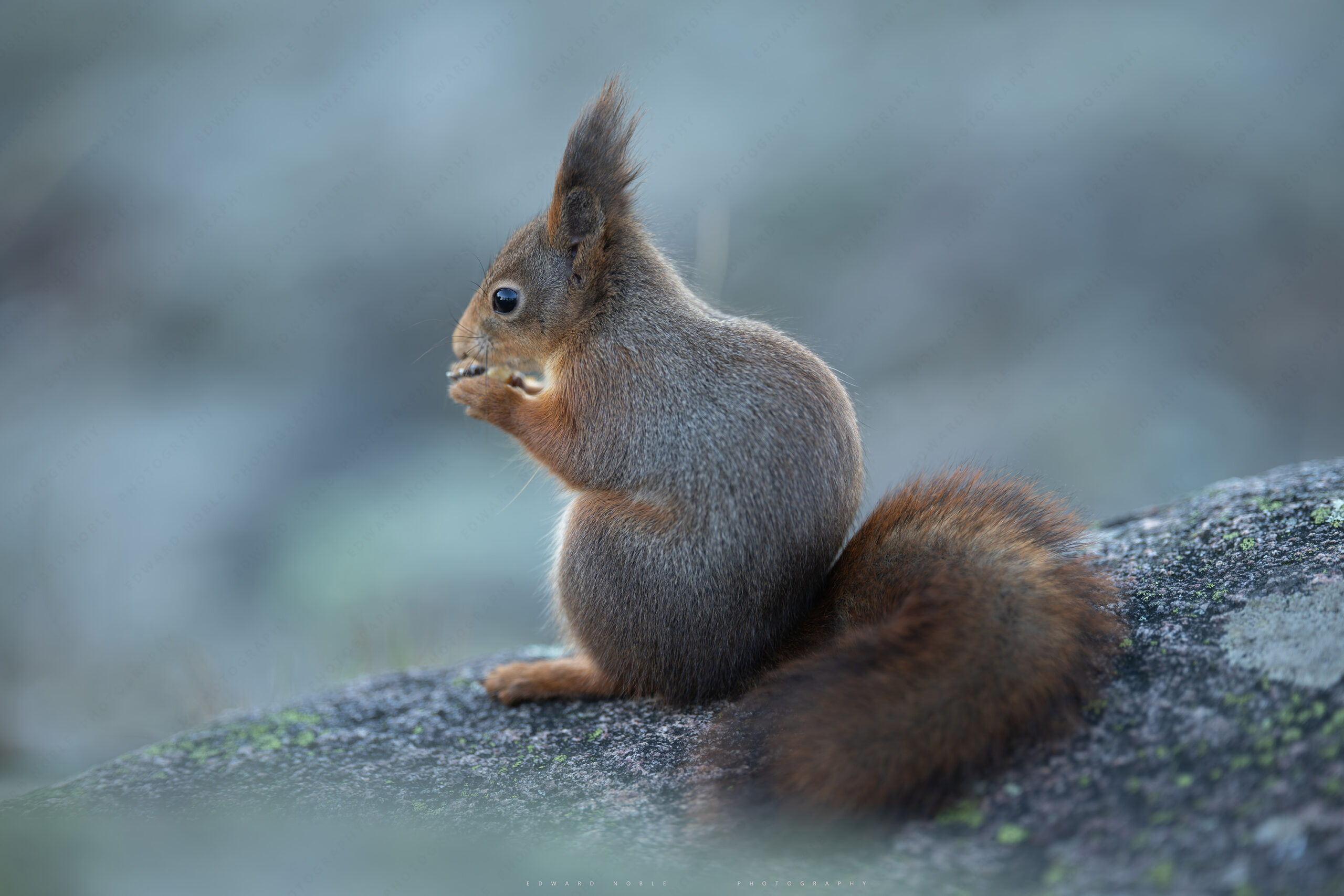
Flat: Dull days can be uninspiring, but this flatter lighting often creates more interesting photos. This soft, cold glow was from a morning where the sun hadn’t risen yet, so they sky was blue, but nothing was getting any direct light.
Tail: When teaching people the differences between grey and red squirrels in the UK, it is often said that red squirrels tails are all one colour, but this is not true. They can have multi-coloured bands running along the thickness of their tail fur. It just doesn’t end in a bright halo like with the grey.
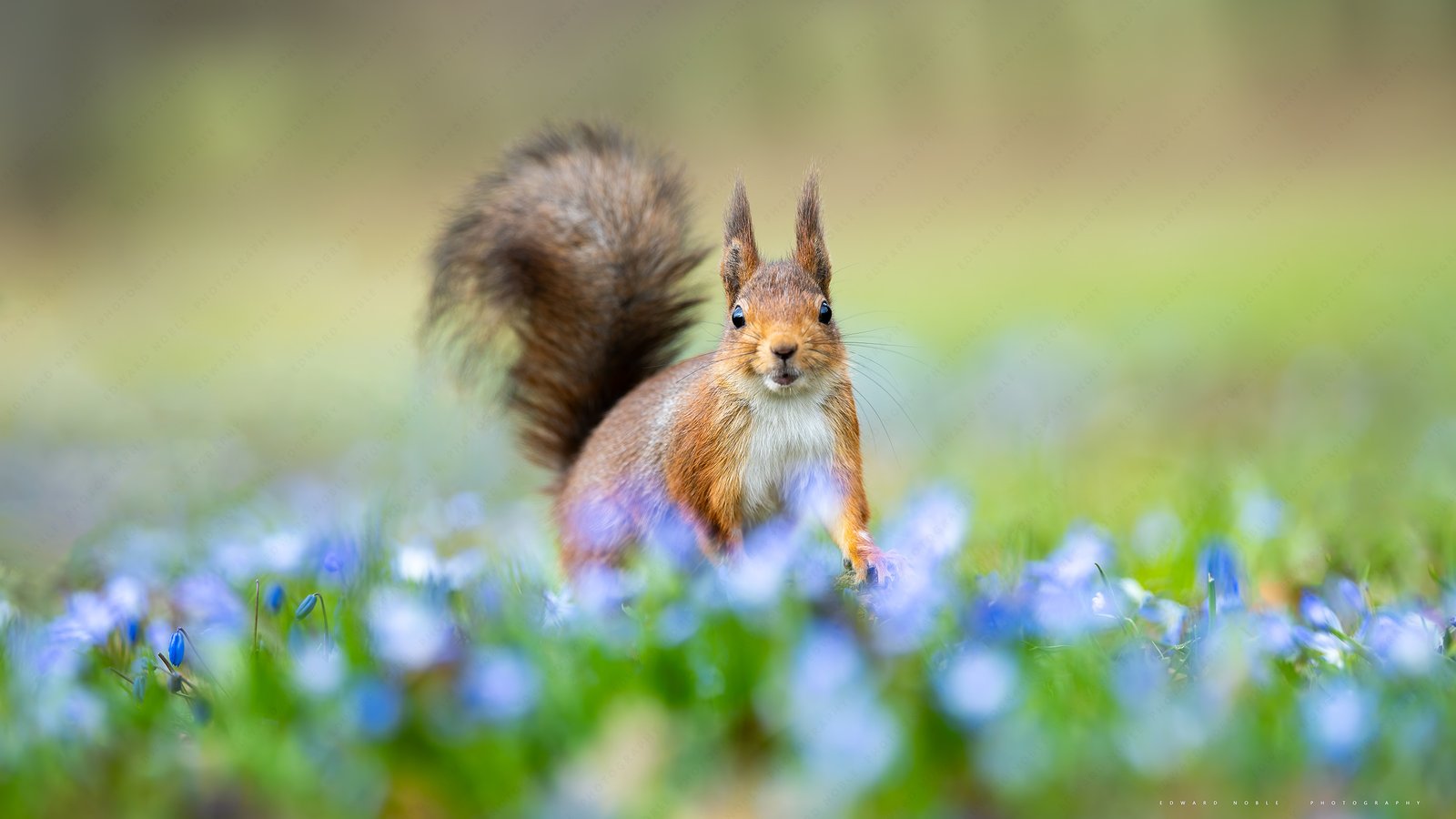
Flowers: and squirrels are an unusual find for me. Squirrels tend not to frolic in the open because they are vulnerable to predators. This was a rare treat for me, but this very much depends on your geography.
Frenemies: Although red squirrels are polite with their human vending machines, they are not friendly to each other. Get two close together and a war will likely break out. Only during mating season and extreme cold will they allow another red squirrel to get close.
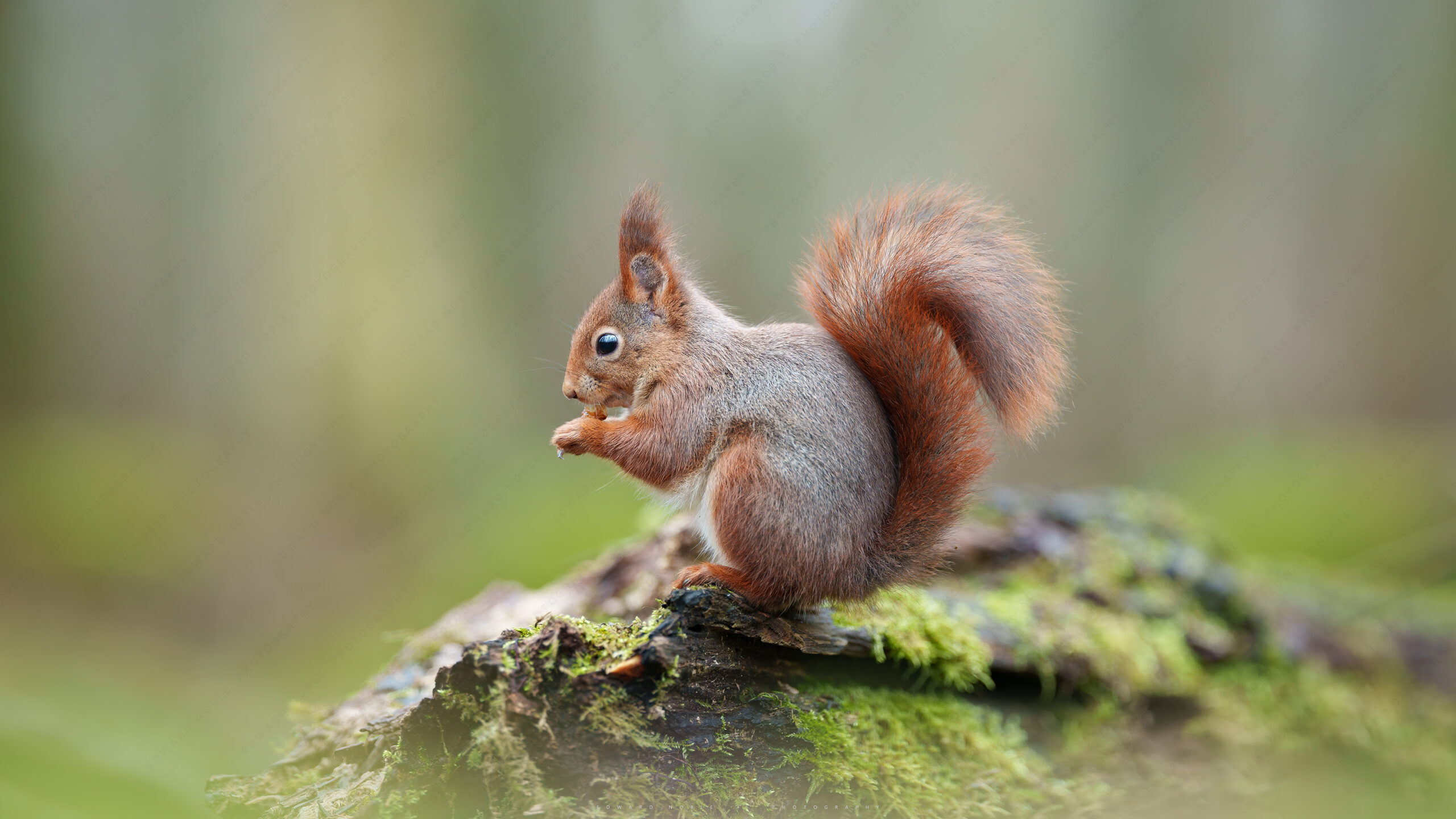
Colour Profiles: Green moss below, with green plants around and green leaves above tends to create a lot of green bounce light. This is almost impossible to fix with some white balance sliders. Using camera matching profiles in Adobe can help, creating your own camera profiles can help a little more, but your best bet is to get better light on your subject.
Tufted Ears: Eurasian red squirrels lose their fabulous ears when they shed their winter coat. This can look a little rough during the coat transition, but once they have their full summer coat they will look a little better.
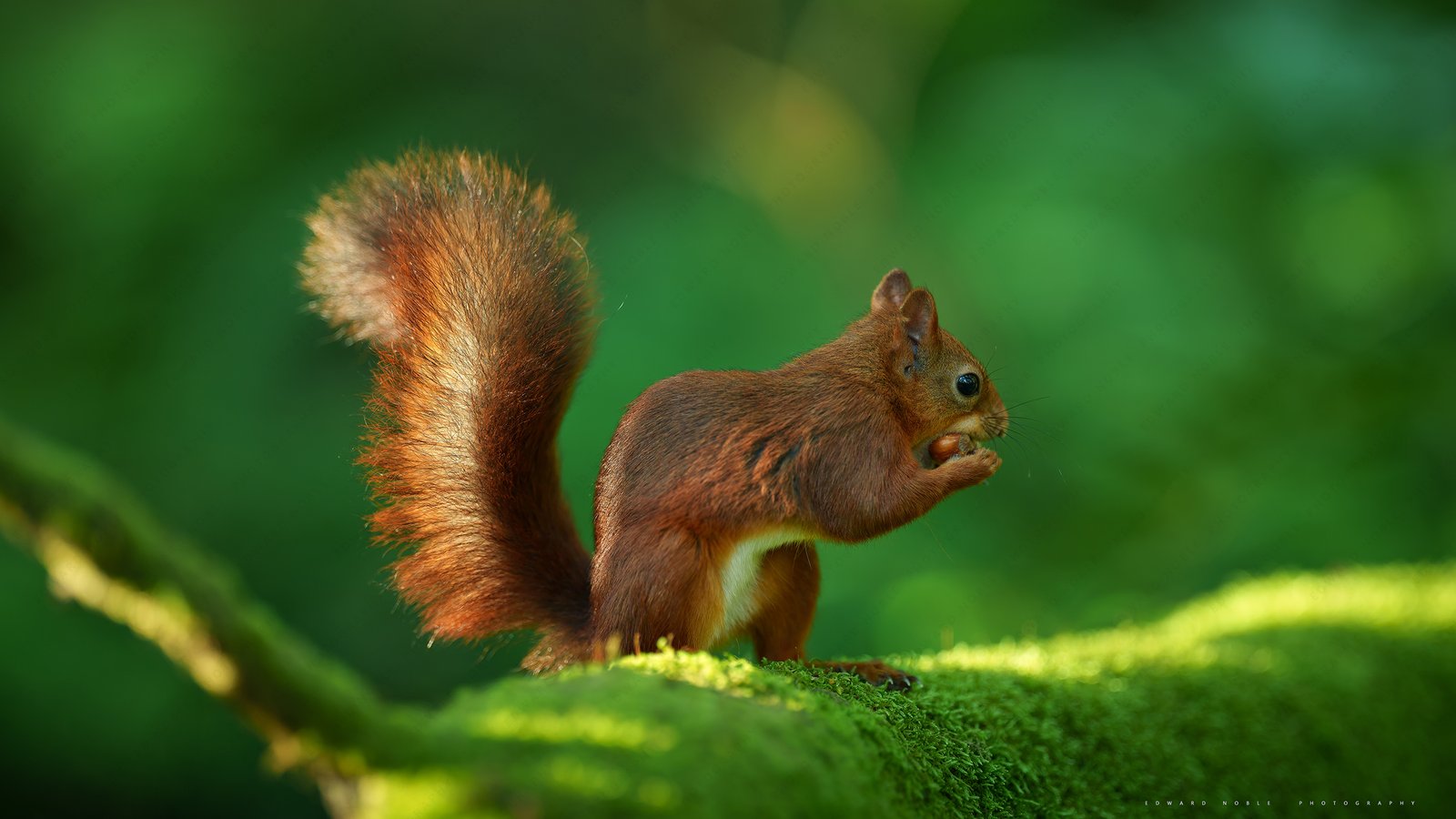
When you’re surrounded by green foliage and the direct lighting only hits those areas, everything will go green. You can either choose to roll with the realism or correct for it and lose the rich greens. Keeping the squirrel’s fur realistically red and white can be helped by playing with colour profiles, and/or selectively editing the white balance on different parts of the image, but this is not easy.
Summer fashion: if you are not so keen on their summer look, fear not – this only last 3 or 4 months. You won’t see them much during this time of year, they will be busy raising their young and sticking to the tree canopies, where there’s lots to eat.
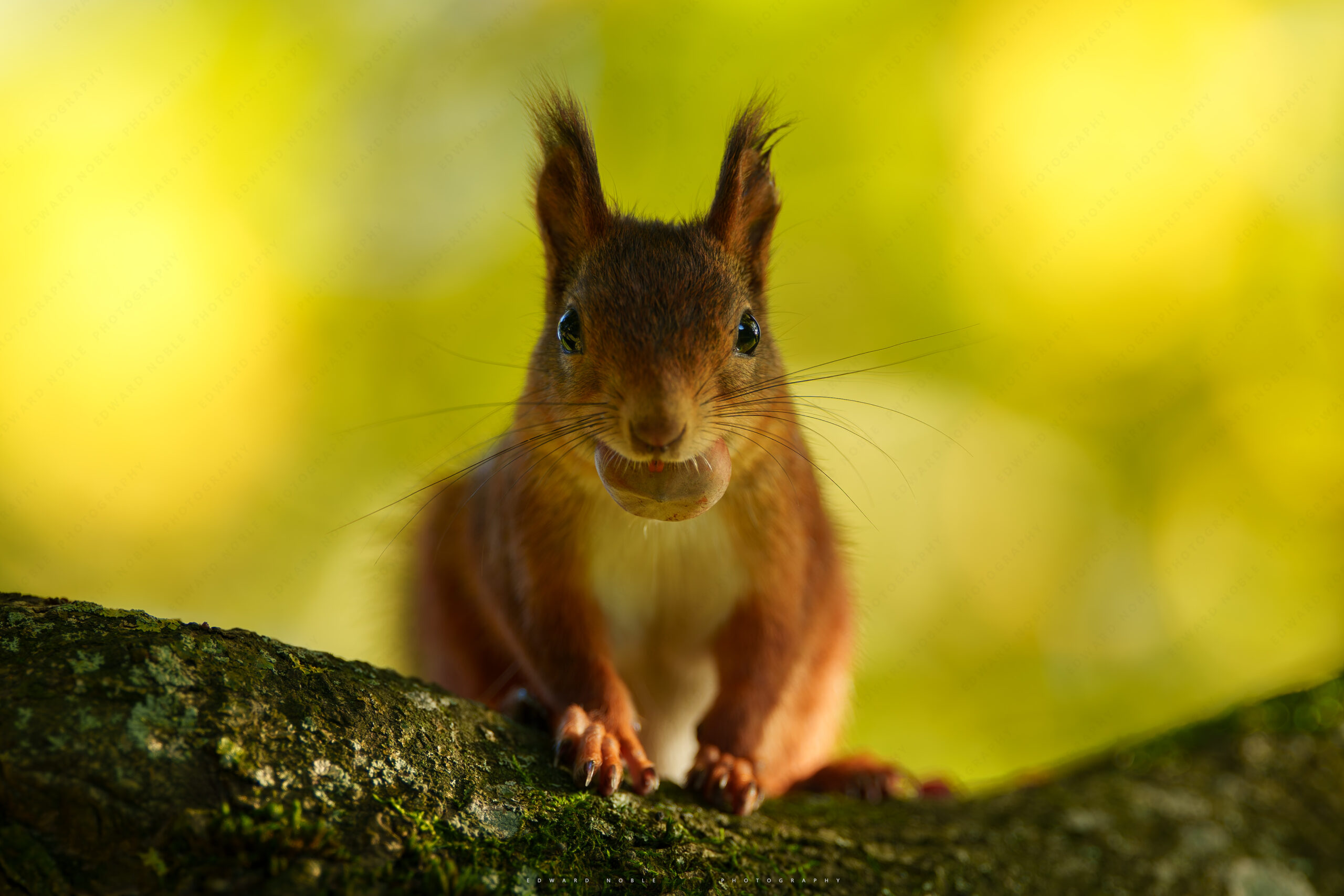
Apex: My favourite lens for shooting friendly squirrels is a fast 135mm. Enabling me to capture some of the environment, while also getting great subject isolation. The f/2 Canon is a great DSLR one, all the mirrorless f/1.8 versions are stunning too, but the Sigma 135mm f/1.4 Art is not only the fastest, but has the most impressive bokeh and (wide-open) image quality that I have seen. It’s pretty heavy, but you can decide if it’s worth it from these samples.
Hazelnuts: Squirrels literally go nuts for nuts in the shell. The only down side to this is they like to bury them, so they will take them far away from you to hide them, so if you want to photograph them, this is possibly the worst food to give them.
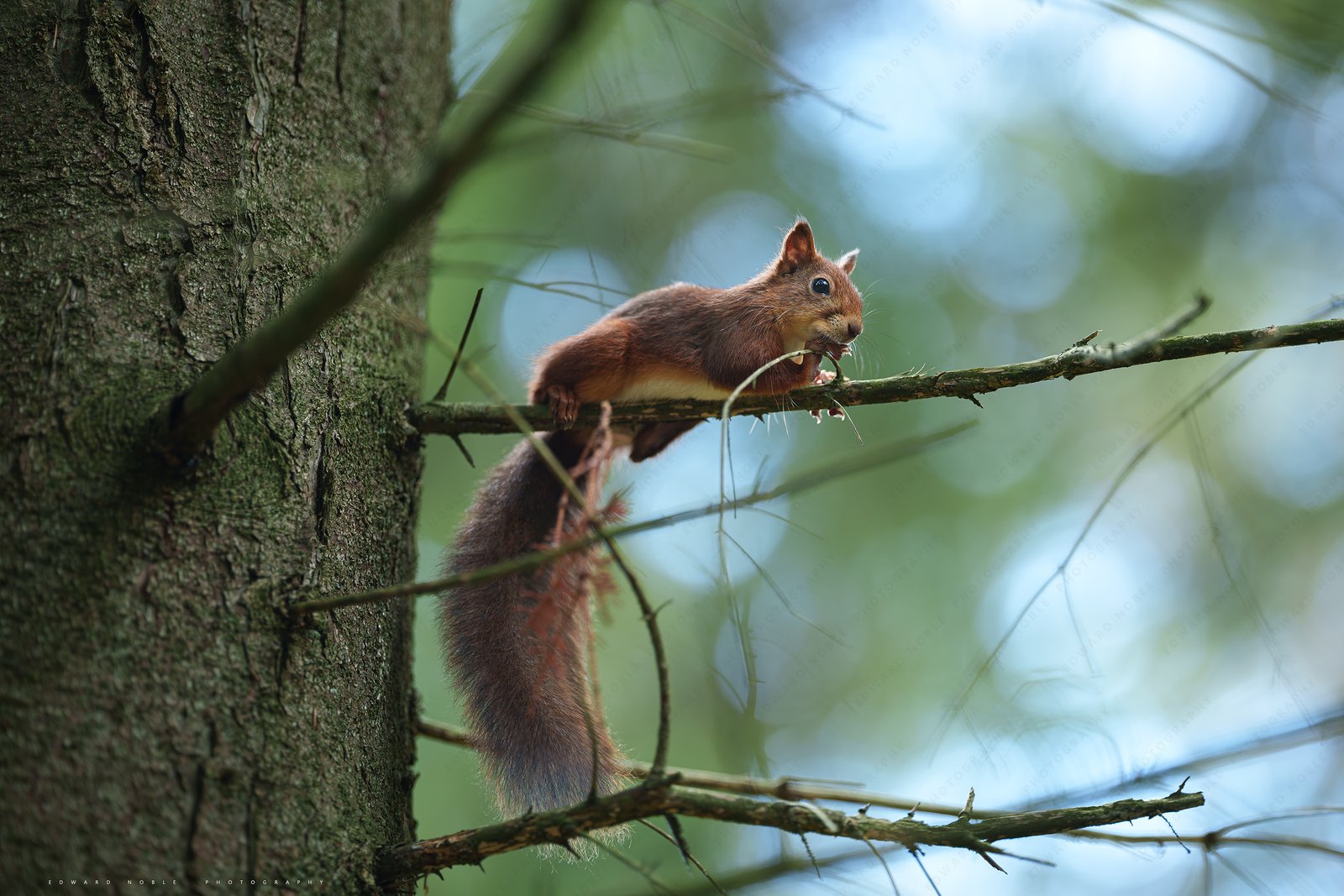
Foliage surrounding your subject can add more context and three-dimensionality to your scenes. Don’t worry about missing a shot because something might get in the way. It’s not like we are burning through film, so get in there and risk losing some photos to potentially get something more dynamic.
In the coldest part of the winter, the Eurasian red squirrel’s coat will be at its greatest volume and most pristine. Today; squirrels are still killed for their tail fur to be used in brushes.
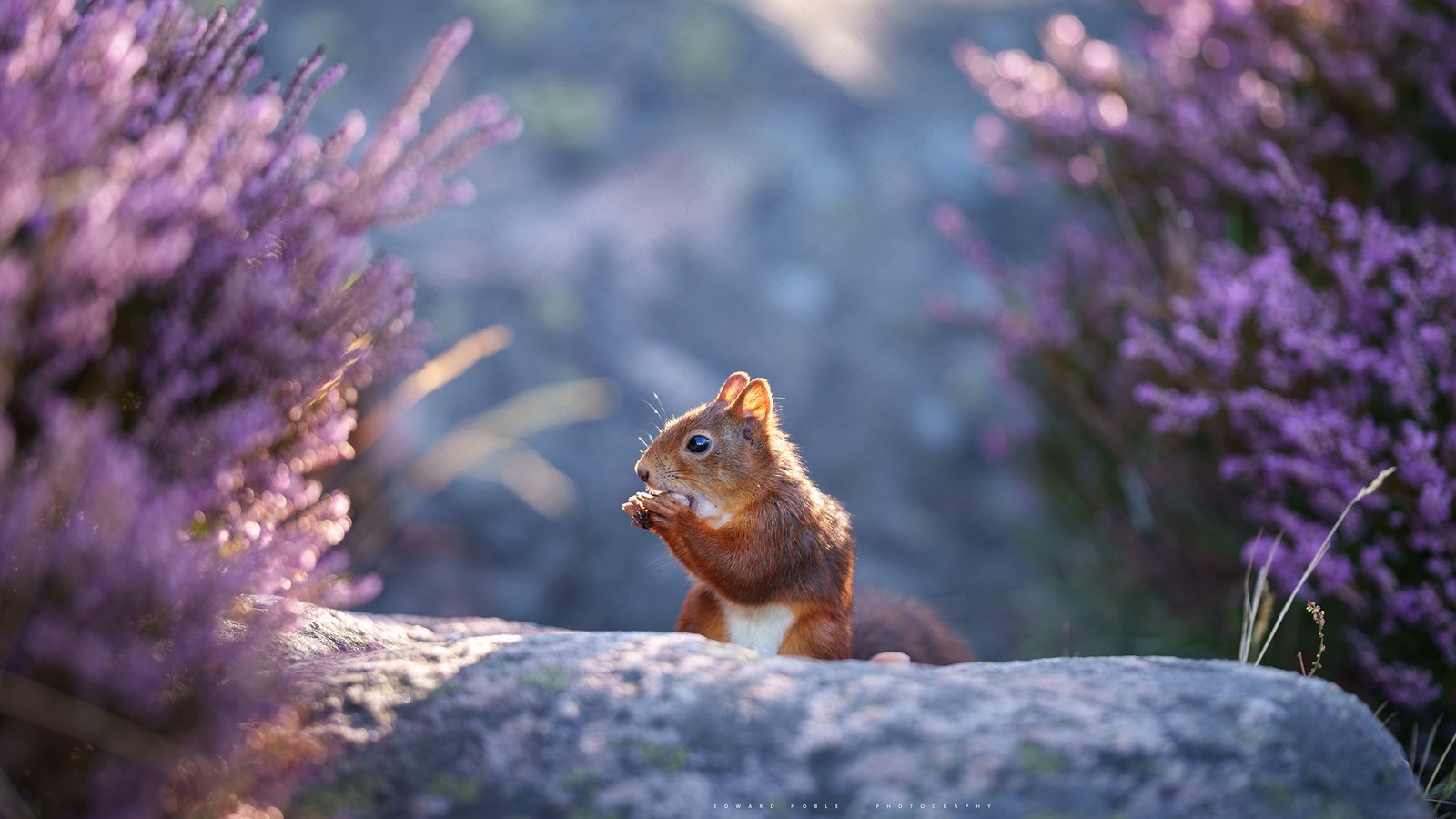
Late Winter doesn’t get much snow here and the foliage can look rather empty and bleak, but the squirrels fur still looks pretty epic during this time, so if you can find some moss, pine and other evergreen trees, you might get away with the scene looking more like early spring.
Persecution: Squirrels have been hunted for various idiotic reasons throughout history. The worst being that they allegedly destroy trees (an excuse they still give for greys today). Even though it has been humans that destroyed 99% of the UK’s natural woodland and squirrels have been balanced with nature for millions of years.
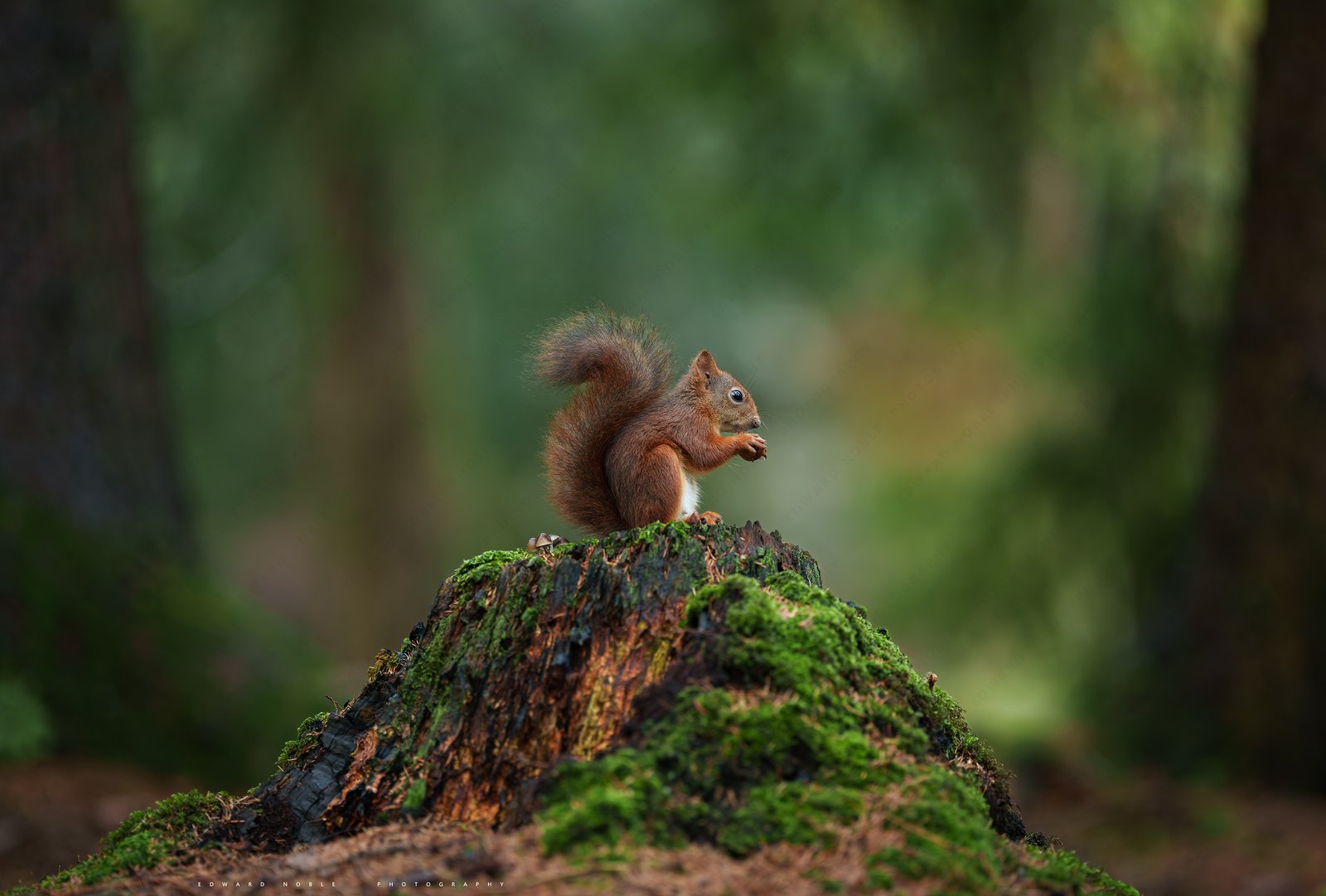
Forest flowers: Although our white wood anemone flowers don’t last too long (2-4 weeks in early spring) these pink purslane flowers have spread from a nearby botanical gardens. Usually an invasive north American plant would be bad news, but this one only waits patiently for the wood anemones to have their time and then bursts into life for the rest of the summer.
Kleptos: squirrels love to steal things. We have lost countless container lids and other bits to their kleptomania.They love to take things back to their nest, where you will never find them, although they may throw them away later on.